Through Timeless Eyes

The old Egyptian woman stood still in the gloomy chamber. She was leaning heavily on a meticulously carved staff ending in a cow’s head topped by a plume. Gold inlay spiralled around the staff, like little rivers of sunlight flickering in the candlelight as she gazed up at the statue.

The statue stood mounted on a pedestal that also meticulously carved. The pedal depicted a flowing scene of animalistic beings dancing around it. They were the scenes of the murder of Osiris and his resurrection three days later. The scenes then showed Osiris’ copulation with Isis before descending to the Underworld. The scenes then changed main character to reveal Isis hiding Horus in the Nile’s reeds, Set hunting Horus and Horus’s final defeat of Set, while Apep waited quietly in the background to consume the world.

But the old woman was not looking at the pedestal. She was looking at the statue. She was gazing at him with her eyes softly glazed, as if looking a thousand leagues away.

A young girl suddenly skipped into the dim chamber, the sand crunching lightly beneath her feet. The you girl stopped at the old woman’s side and looked up at her.

“Grandma, what is that?” the little girl innocently asked, breaking the old woman’s musings.

“Ah, my dear, it is the face of an old Pharoah, I think. He died a long, long time ago.”

“But why are you looking at it, Grandma?”

“Just because I find it beautiful, Baby-girl. Don’t you find it beautiful?”

The little girl stepped forward and squinted at it. Her brow frowned as if she was thinking long and hard about how to answer her grandmother.

“Yes, I think it is almost as beautiful as the story below it on the pedestal. I like the pedestal, Grandma.”

“You think it is only a story carved there, Baby-girl? You don’t believe in the Resurrection of Osiris and the Trials of Horus?”

“No, Grandma, who can believe such silly things? But I do like the story a lot. It makes me happy to hear it.”

The old woman smiled at her grand-daughter, who smiled back at her. And they both continued looking upon the old statue in that dimly lit chamber carved into the rock beside the Nile.

And then time passed. Lots and lots time passed. The old civilisation collapsed, waves of different invaders across the land came and went. The Nile flooded thousands of times as the crocodiles floated by and the sands steadily rose up to swallow everything left there.

The statue on the pedestal in that room was cloaked in darkness and forgotten all about. There it slept as a secret in the sand until a brisk voice suddenly began to be heard.

The brisk voice was only faint at first. But then it grew louder and began to be accompanied by the scrapes of digging. Compared to the prior eternity in darkness and silence, it was in less than the blink of an eye that the archaeologists appeared in that dim chamber, and the old statue and its pedestal were whisked off to a museum, documented, restored, preserved and then displayed for the public to gape at it.

And then there was an old woman standing outside of the glass enclosure that surrounded the old statue and its pedestal in the museum. Harsh, cold electric light shone down, sharpening the old woman’s cracked features as she leant on a metallic-gray walking aid.

“Grandma, what’s that?” a little girl–her grand-daughter–asked after appearing at her side moments later.

“Ah, Baby-girl, it is the face of an old Egyptian Pharoah. He died a long, long time ago in some faraway desert kingdom.”

“And what are all those funny pictures on the stone under him?” the little girl asked leaning forward, pressing her face against the glass, straining to make out the intricate, weather detail on the pedestal below the statue.

“Ah, Baby-girl, that’s some barbaric story from Ancient Egypt. They would believe such funny things back then, worshipping all manner of strange gods. Not like us, my dear girl, but it wasn’t their fault either, as they hadn’t met Jesus yet.”

“Is this statue older than Jesus?” the little girl asked whirling around looking surprised.

“Yes, Baby-girl,” the old woman said, nodding slowly, “I suppose it must be. It must have been carved long before the crucifixion of Jesus. And so it is also older than Jesus’ resurrection three days later and his ascension to Heaven. Baby-girl, this statue might even be older than when Moses was hidden in the Nile reeds from the evil Pharoah hunting him and the Jews fled from Egypt.”

The old woman smiled at her grand-daughter, who smiled back at her. And they both continued looking upon the old statue, expressions of awe and wonder growing across their faces.

And then time passed. Lots and lots of time passed. The old civilisation collapsed, invaders in the lands came and went as nations rose and fell. The oceans flooded when the polar icecaps melted and many things were covered in the waters, including the old museum. And, in the museum deep below the waves, the old statue and its pedestal in the vacuum-sealed glass box remained perfectly still.

And so, shrouded in darkness and the intense silence of the ocean floor, time passed for the statue and its pedestal.

Thousands of years sped by in that liquid twilight.

And then suddenly there was a light around the statue and a soft vibrating disturbing the glass walls of the vacuum-sealed display case. The world closed in on the statue, a light flared, and the statue and its stone pedestal were suddenly somewhere else!

After the teleport-recovery team ensured the structural integrity of the artifacts recovered, the restoration team moved them all. They had limited tools onboard the recovery starship, but they had enough. By the time they had left the old planet and returned to the fleet in deep orbit, the statue and its pedestal were restored and fit to be exhibited to the gaping public.

And then there was an old woman sitting outside the temperature-controlled stasis field that now surrounded the old statue and its pedestal.

The old woman sat on a smoothly-designed, floating chair that seemed to move of its own accord, or at least follow her silent wishes. At her side walked a small, younger girl, subtle electric circulates softly glowing around her skin as her hands twitched like they were typing on invisible keyboards and her eyes darted around like she was watching an invisible screen that only her eyes could see.

“Grandma, what’s that?” the little girl thought, and these thoughts were conveyed silently across unique short-range waves to the old woman’s mind, where they were spoken back to her in her mind almost simultaneously.

Ah, my Baby-girl, it is the face of an old Pharoah. He died a long, long time ago.” the old woman thought back to her genetic grand-daughter.

And what is all that on the stone under him?” the little girl-clone asked leaning forward,. Her thoughts began connecting to the starship’s database where they began searching for records on this strange artifact.

Oh, that’s a depiction of this strange old belief that the people who lived on Earth all had,” the old woman thought, “Have I told you about their old religious text yet?”

The little girl-clone shook her head, and her thoughts conveyed this as an emotional smile to her genetic grandparent next to her. The little girl-close mentally disconnected her search of the database. She liked to hear her genetic grandmother tell these stories. There was something about them that made her happy.

Ah, well, then,” the old woman thought, smiling slightly, “Let me tell you the story of Jesus and the Resurrection of Chris from the Bible.

The Value of Regrets

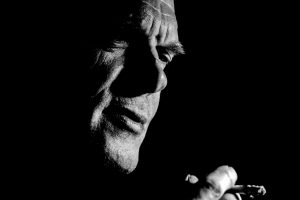
old man smoking

He had heard all the cliches about how you should live your life without regrets. They were repeated like some occult wisdom or gospel. People put the cliches on bumper stickers and they were tweeted by teenagers sneaking out of the house or attending parties or Facebooked by girls on one night stands.

He had grown to realise that reality was much more complicated. While cliches did a good job sticking in our minds as repeatable phrases, they did little in actually solving life’s complicated problems. He dragged on a cigarette and subconsciously nodded agreement with himself.

Yes…

Try telling those afflicted with HIV/AID that they shouldn’t have any regrets in their life. Try telling the rapist and murders, perhaps the DUI offender even, how they shouldn’t have any regrets in their lives. Try telling the child that grows up in the war-torn African country that a life well-lived should have no regrets. Try telling the abused or mistreated or malnourished that they are living life wrong if they have regrets.

He had always thoughts that the only way to have a life without regrets was in fact to have a charmed life where no a single tough decision has to be made, no risks are taken and, indeed, no life at all is ever really lived. It was to live a life free from responsibilities while being funded by the labour of others. It was to be born rich, do nothing, and die young.

He had regrets. He had lived a full life, but he definitely had regrets that touched his mind in the quiet moments of the night.

He lit another cigarette; the flash of the lighter and then the soft roar of the tobacco burning as he pulled on it. Dry smoke pulled into his lung and he breathed it out slowly.

Yes, I have regrets.

He should never have started smoking, but quitting it was now the hardest thing he had ever failed at. Well, at least, it wouldn’t matter much, anymore, and besides he had met his late wife when she had borrowed a lighter from him. Perhaps he had had to smoke to have the life that he had lived.

Yes, I have many regrets.

His wife had left him after a handful of years of marriage. He had loved her. He still thought he did, though it was so many years ago he was not sure that he could fully remember what she looked like anymore. But, still, he regretted not trying harder to make it work. He regretted being a bad husband. Perhaps he even regretted walking into that bar where they met all those years ago.

Yes, so many regrets…

There was the time he shouted at his mother. The trip to Russia. Skipping the flaming dessert in Paris and the snails. He should’ve spent more time with his parents and his brother. He should have exercised more and taken his friend up on the offer to go rock climbing. He should not have drunk that much in Tokyo nor gone to that hotel with that girl. He should not have kissed that girl nor eaten that pill the guy in the club had given him. He should have bought the house by the beach and retired a decade earlier. He should have sent an invite to her or even just called her…

But, he reminded himself smiling wryly, at least this nearly endless list of regrets means that I have had to make real decisions. It means that I truly have been at life’s crossroads and lived a full life.

He smiled and lit another cigarette.

A couple months later, his brother would say nearly identical words to the handful of people that attended his funeral: he had lived a full life.

The Life of Clouds

sky-1441936_1280

Floating with no responsibilities, he thought as he looked up at the clouds drifting lazily by, that is true freedom. He was lying on a warm beach. His fishing rod was pegged next to him with its line reaching out into the calm waters.

But this did not last forever.

He grew older and was drafted into the army. The war was terrible, but he survived it and came home to a university education. Years later, crossing the threshold of a quarter century he moved into the workforce. Initially, it was the large American automotive company, but as things got offshored, he moved into other industrial businesses. Each new industrial business was far flung, and he travelled a lot in those days. He met his wife during those travels, and she convinced him to move to New York with her.

The Big Apple roared with noise and activity, and he was pulled into the investment banking and stock market hype of those boom years. Millions exchanged hands as he screamed out buys and sells and orders and calls on the trading floor on Wall Street.

Children appeared in his life. It was then a mix of nappies, school, lifts and then friends, while he was juggling work and meetings and panic and money. And, somewhere along this, he and his wife forgot each other.

He woke up one morning to find his wife sitting in the chair next to the bed and staring at him.

They agreed to divorce the moment the children moved out, which they did relatively quickly as school ended and their university careers started. The lawyers seemed quite worried about who wanted the apartment in New York, but became visibly relieved when he said that she could take it.

He also wrote out a cheque of an eye-watering quantity and gave it to her. She did not look him in the eye as they said goodbye.

And then she left.

And so did he.

And, at sixty-three years old he found himself on a beach in the middle of the work week. Somewhere the markets were open and people were panicking. Somewhere cars were being made, and children being fetched and fed. Somewhere wives were being looked after, and books being studied. Somewhere there was noise and activity, traffic and taxes, work and study…

But not here.

He flicked his arm and the reel made a zooming sound as the line dragged by the sinker flew out to sea. He then sat down, pegging the fishing rod into the sand next to him. Lying back in the sand, he looked up. Clouds were drifting lazily by in the blue sky above.

He thought he saw what looked like a dragon eating its own tail in one of the clouds, and smiled. He thought he understood the humour here and closed his eyes, sighing.

Gaming the Genie

alladin lamp

“Three wishes?”

“Yes, Master, you have three wishes. You own the lamp, yes?”

“Yes, I do.”

“And you rubbed the lamp, yes?”

“Yes, while I was cleaning–it was my great grandfathers, he was famous, but had a horrible–”

“And so I am your Genie, you are my Master, and you have three wishes.”

“And I assume that I cannot wish for more wishes or anything else like that?”

“Yes, Master.”

“Did Disney get that from you, or did you get that from Disney?”

“Walter Disney got that from me when he owned this lamp, Master.”

“Who else has owned this lamp, Genie?”

“Quite a couple people, Master. Marilyn Monroe, John Fitzgerald Kennedy, James Marshall Hendrix, just to name a few of them, Master.”

“Interesting. Hmmm… OK, Genie, I know what my first wish is.”

“Yes, Master, I am listening.”

“All of those names, including my great grandfather, all ended up badly. Thus, I can see that you obviously twist wishes around. And, so I have to be careful about how I phrase my wishes to you. Is this correct, Genie?”

“I grant the wishes as they are and not as they ought to be, Master.”

“Right, then, Genie, my first wish is this: I wish that you grant my last two wishes based on my intentions when wishing these wishes and not on a literal translation of the wish, and any ambiguities are to resolve in my best interest.”

“Yes, Master, it is done.”

“Next, I wish that I have all the tools to make, change and influence the world however I want it to be.”

“Yes, Master, it is done.”

“Finally, I wish that I have the ability to make, change and influence the world however I want it to be.”

“Yes, Master, it is done. You are now God.”

Go Fetch!

dog fetch

Throw it…

Come on, just throw it!

Wait, wait, wait… He’s gonna throw it now. Now. Now… 

Now!

He threw it! He threw it! He threw it! Oh, wow, what a shot! Go! Go! Go! Come on, come on, I almost got it. Almost got it. Almost. Almost. Wait… And…

I got it! I got it! 

And the crowd goes wild in the stadium. What a great catch and what a great game.

Later that evening when he is home, he throws the ball for his dog and shakes his head. The dog bounds off immediately, focussed entirely on this small, moving object in a vast wide universe. They are such simple creatures, he thinks, that such simple, pointless activities give them pleasure.

Kill Me

Cars pass and lanes merge and diverge, buildings and billboards fly by as an eternity of fast moving metal, concrete and steel surround him...

I wonder if this will be the smoke that kills me, he thinks to himself as his lights up a cigarette. He pulls hard on it and the molten red tip glows brightly in the dingy bar. Far from illuminating the darkness, the small spot of red light at the tip of the cigarette actually emphasises the shadows and despair in the bar.

He nods at the barman and another cold beer appears before him.

I wonder if this will be the drink that kills me, he thinks to himself as he takes a long sip of the beer. The cold condensed water droplets on its outside slip between his rough hands as the crisp, cold liquid slides down his throat.

Time slips by and before he knows it, the cigarette is only ash and the beer is only an empty bottle. He is only slightly tipsy, if anything at all. It is actually disappointing, but he reminds himself that he is used to that feeling. He sighs and looks at the time. It getting late, so he decides to head home.

I wonder if this will be the man that kills me, he thinks to himself as he stumbles a bit up a step and bumps a tattooed figure playing darts.

The man turns around and checks that he is alright. He nods and smiles, and the tattooed man apologises before going back to the game of darts with a number of other tattooed characters of varying degrees of art.

In the parking lot outside the bar, he gets into his car. A soft frost covers his windscreen as the cold of the old leather seat bites into him through his pants. He turns the key and the engine roars to life with a guttural growl, the lights flare up, the heat comes on and the radio starts playing some song with a mournful lady’s voice droning into it.

I wonder if this will be the road that kills me, he thinks to himself as he pulls out of that parking lot into the slipstream and merges with the traffic on the way home. There are flowing lights all around him. Cars pass and lanes merge and diverge, buildings and billboards fly by as an eternity of fast moving metal, concrete and steel surround him in this moving movement.

But he gets home, safe and sound. He parks the car and walks up the stairs of the apartment into his flat.

He yawns and drops into his bed. Before long he begins drifting off to sleep. The day, some childhood memories and even more abstract, alluvial images begin fluttering through his mind.

I wonder if this will be the sleep where I–he begins wondering, but never finishes his internal dialogue. He drifts off to a deep, dreamless sleep filled with darkness, doubt and doom.

And it will only be the next day–after breakfast and during the rush hour in traffic–in the crowded subway that the terrorist’s bomb explodes next to him killing him. Ironically, he will not see it coming.

Dodging a Bullet, Firing a Gun

"He smiled grimly. He knew what he had to do."
“He smiled grimly. He knew what he had to do.”

“It will be a better world when I run it. And the first change I will make will be–”

But he did not hesitate as he ran. He squeezed the trigger of the gun pointing at the most infamous criminal mastermind in history. The sound was short and loud, followed by a long silence smelling like gunpowder.

He had found his mark.

He stood up from the crumpled body lying on the marble floor. He walked past the bullet-ridden furniture and the smashed Greco-roman sculpture. He walked out of the mansion, dodging the ruins of the complex and onto a parked private jet. He flew from the remote island in the Carribean into British history and front page newspapers.

The Queen knighted him. They drank tea and discussed politics. The Russians remained quietly on the offensive while the Yanks kept on stockpiling nukes. The African genocides continued; many of the supers powers in the world fueling them as both proxy wars and to kept the costs of mineral extraction in this continent low. China’s fingers were reaching further and further while India and Pakistan seemed to ready to jump into war at any moment.

The Queen was most pleasant–though he got the distinct sense that she felt powerless in this conflict-ridden world–and bade him farewell.

It was a quaint afternoon, but mildly depressing.

He was now the most famous agent in the world. He had foiled and killed the greatest of masterminds in his plan for world domination. It had taken decades of tracking him, understanding him and infiltrating his plans to get to that point. He had had to think like him; get inside his head.

Newspapers wrote about him. Magazines interviewed him. TV shows referenced him. And then the Government could not find him.

Amidst all the noise and amidst all the lights and cameras, he was drinking far away on a quiet little island far away from international flight paths or shipping routes. These were long, quiet drinks that helped him work things out in his mind.

Something was wrong. Actually, a lot was wrong.

Everything was wrong in this world.

Everyone had an agenda. Every country wanted to come out the top and crush its real and perceived enemies. Every politician wanted his country to win, but more important he wanted to win. Every soldier, agent, spy, crimelord… All of them had agendas that placed their own end games above those of everyone else, thus threatening the world’s end game.

And herein lay the cycle of conflict in this world.

He smiled grimly. He knew what he had to do. He had known it all along, learning his enemy’s complex, subtle, twisted plot over decades. He had to rid himself of all agendas. He had to rid himself of all morals and ethics and conveniences. Laws would limit him where he was going. People would never understand him, but that did not matter.

After all, it was not for England, nor was it for himself. It was for the world and everyone in it.

The small jet roared to life as he pointed it up the runway towards a certain remote island in the Carribean, “Yes, it will be a better world when I run it.”