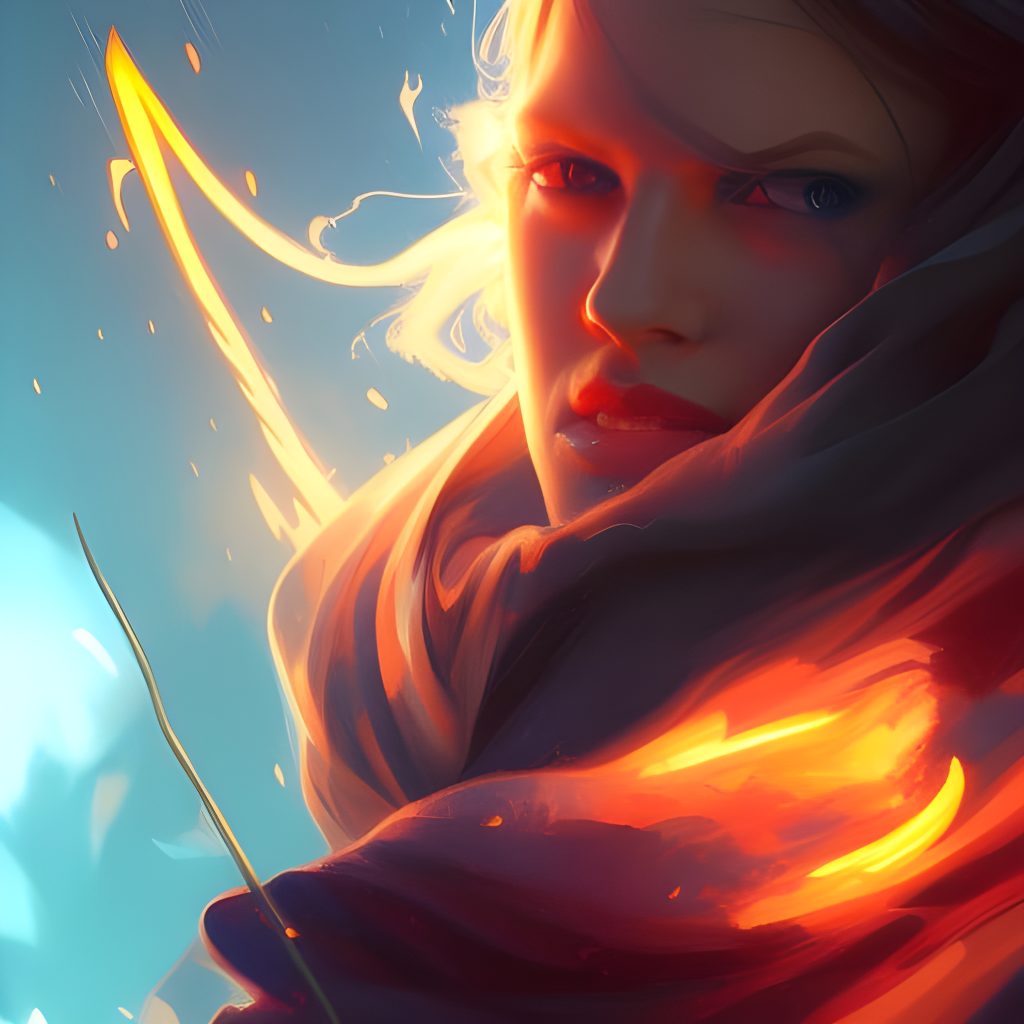
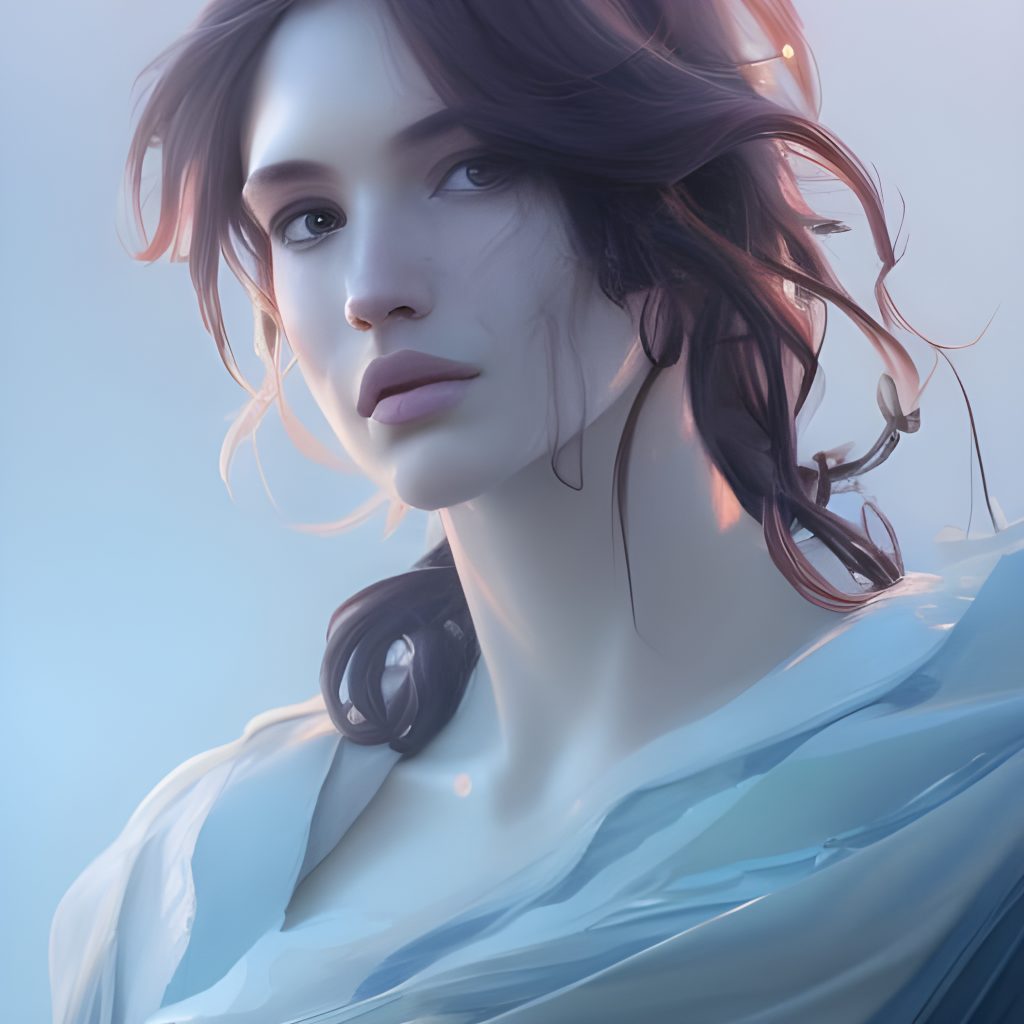
“It won’t be pleasant and it won’t be quick,” the old lady brayed, cackling just for effect. It was expected of them, after all, “So I’d be eating my veggies if I were you, and don’t drink too much wine. Oh, and drink more water.”
The man before the three of them nodded, a dark look on his face. At the wave of the young woman’s hand, he turned and scurried out. There was a queue behind him stretching off into the late afternoon. A long queue after a long day.
While the Fates were powerful and all, the Minor Fates touched people’s lives more often. Maybe, if you were a hero or a king or something grand, the Fates–the Maiden, the Mother and the Hag–would be what you consulted regularly before starting a war or setting out to slay a dragon. But most people are not heroes or kings. Most people just want to know how to get rid of gout, have a good bowel movement or perform better in bed. Will it rain early or late this planting season? How will the harvest look? Should I visit my rich cousin in another city or remain here to look after my ageing parents?
Most people consult the Minor Fates: the Girl, the Cook and the Mother-in-Law.
And so, the Minor Fates were always busier than the Fates. The queue stretched out from their house and down the road as far as any of them could see.
The Cook sighed and stood up, “Right, ladies, I think that’s it for me. I’ll open up a bottle for us and get something going in the kitchen. Right, away with you all. Away!” She waved a hand dismissively and shooed the crowd of peasants out of their house before smiling warmly and closing the door.
The Girl yawned and stretched like a cat in her seat while the Mother-in-Law clicked her tongue and shook her head. She always knew better.
The Cook shuffled off to the kitchen, and soon a pot was boiling with various nice-smelling aromas rising from it. Each of them now sipped a delicious Chardonnay–their volumes of business ensured that they could afford the good stuff–and they were shifting into evening mode.
Bang-bang-bang!
A sudden, loud three taps came from their door. The Mother-in-Law clicked her tongue and snorted before pushing herself up and hobbling over to the door. She was readying herself for a good scolding, but, when she opened it, she froze.
Dramatically–and this was particularly dramatic, as the early evening sky outside was cloudless and calm–a bolt of lightning flared outside and was followed by a boom of thunder. The lightning illuminated the horrific three that stood on their doorstep; the wizened, sightless Hag with a single tooth in her mouth, hanging on the arm of the Mother who currently had the working eye, while the Maiden hung a little back and was kicking her feet somewhat nervously.
“Did you make that lightning bolt shoot down, hmmm?” the Mother-in-Law croaked, scolding the Maiden and Mother in equal measures. The Mother-in-Law was always congenial to the Hag in person, though she would say the meanest things behind her back.
“Ah, yes,” the Maiden said sheepishly, kicking the dirt outside, “Yes, I, uhm, perhaps over did it a bit.”
“You think, huh!” the Mother-in-Law said, holding her well-crafted scold in place, and then there was an awkward pause.
“Sisters, don’t stand out there. Come in, come in,” the Girl spoke out quickly, breaking the awkwardness and the Mother-in-Law hobbled a bit to the side to open the doorway for the three Fates, “The Cook’s got a pot on the boil and we’ve a bottle open. Come join us, sisters.”
The three Fates shuffled inside, the Hag leaning on the Mother while the Maiden dragged her feet obstinately, but soon everyone was seated with a glass of chardonnay and an incoming bowl of stew (one at a time for the Fates, as they had to share a tooth).
“Now,” the Cook started, “To what fair reason do we owe the pleasure of our great sisters coming all the way down from their lofty mountaintop to visit us little fates?”
The Mother–using the single working eye amongst the three of them–looked at her sisters a bit sheepishly. She opened her mouth to speak and then closed it.
“Ah, please, Sister, you best explain,” the Mother said, and handed the Hag the eye, which the Hag promptly popped in, blinked a bit, looked around and then focused on her lesser sisters before them.
“Well, yes, uhm,” the Hag started, “As you well know our lofty mountaintop is quite far from peasant fields and markets and all. Things don’t grow too good up there either. And, you know, we sisters have to eat too, so, well, we tend to boil up the birds that we catch up there and, uhm, well, we are struggling a bit with the diet…”
The Hag ended lamely, looking suddenly down at the floor with a slight redness entering her face. The Mother was furiously contemplating the far wall while the Maiden fidgeted in her seat.
The Mother-in-Law smiled, nodding knowingly, and leaned forward to pat her greater sister’s bony leg.
“You need more fibre in your diet, dear sisters. Potatoes, corn and wheat keep quite well for quite a long time. Some teas also keep well, hmm? Also, don’t drink too much wine. Oh, and drink more water. Water is very good for you…”
The first time Tim saw Ipsy was when he was a young boy. Down by the river that ran past his stepfather’s house, he had looked up from trying to tickle fish in the cool water, and Ipsy had been standing there with his wild hair sticking out at all angles and grinning madly.
“I’m Ipsy, Timmy. Come on, I know where treasure is hidden,” Ipsy had said, grinning, and ran off into the woods without looking back. Tim had chased after him laughing; the fish, the river, and what was in the old, dark house all forgotten.
Colours had looked different for Tim around Ipsy, the wind had carried music and the shadows’ secrets suddenly had not seemed so dark. The Sun had danced in the sky, the Stars’ ballroom had been the Moon’s tapestry while the woods had become their kingdom. Indeed, Ipsy and Tim had run as free as the beasts, screaming, laughing and playing. They had chased butterflies and faeries, discovered forgotten gods, and even–after an epic quest–found a magical sword. They had drunk wine made of moonlight, supped on starlight, and danced madly in a magical clearing beneath the moonlight of another sky. With Timmy’s wits, Ipsy’s bravery, and their magical sword, they had embarked on great quests and vanquished the wicked while protecting the innocent, and, only once, in its lair, they had fought a big, old, mean Dragon…
Indeed, terrified and cowering in fear, Tim had watched Ipsy slay the fiery, roaring Dragon.
“Don’t worry, Timmy,” Ipsy said, covered in the Dragon’s blood and grinning madly, his eyes twinkling with an unseen light, “ You are safe now.The old beast deserved it.“
Tim was shaking and Ipsy grabbed him and hugged him tightly. That was how all the dragon’s blood had gotten onto him, he was sure. Ipys was the strong one. Tim had been too scared to do anything and had only watched as Ipsy slew the dragon.
“You trust me, Timmy?” Ipsy asked, a shadow flickering across his face, to which Tim nodded and gritted his teeth–they both knew what was coming, “Good. I can’t go where you are going, but I will always be here. Always. Come find me in the woods, Timmy. Come find me where we danced in that moonlit clearing.“
Tim remembered how blue the police’s lights had been, flashing rhythmically. Like awful, screaming little moons as they closed him in cold iron and drove him away from the magical kingdom and Ipsy.
***
Each morning, the guards would let the inmates out into the yard. Some would cluster in gangs or mill around, smoking those nasty illicit cigarettes that seemed to permeate penitentiaries. Others would gym but Old Timmy–as he was now known–did not like the touch of iron. His sixty-odd years of incarceration had more than enough cold iron for him.
No, he liked to walk around the yard to the far side where some flowers grew on the other side of the fence. Lillies and primroses sprung up there around the smallest sliver of a stream that trickled by. It vaguely reminded him of the old river back home but that had been so, so long and he was not sure he could remember it quite right anymore. Maybe he had made that up too?
And then, one morning, he hobbled through the milling inmates–they all ignored the bent, crazy Old Timmy–and reached the fence by his flowers when he saw the wild hair and wide grin of Ipsy standing there. Ipsy had not aged a day!
“It is time to come home, Timmy,” Ipsy said, his face full of concern, longing and sadness, “Come home.“
Timmy shook his head and blinked. He had often wondered if he had imagined Ipsy? Had he imagined their adventures? They had told him that he had and, after sixty-odd years, he had started to believe them. But here, standing before him in the full morning light was the wild-haired, grinning mischievous Ipsy.
“B-but I can’t, Ipsy,” Timmy said, his decades of facade cracking and tears starting to trickle down his face, “I really want to, Ipsy. I really, really want to, but I can’t get out here. They won’t let me, Ipsy. They never let me, Ipsy–“
Ipsy stepped over the flowers and came up close to the fence–but was careful not to touch the iron–and Timmy saw the sadness in his eyes. So much sadness! It was oceans of hurt and pain, washing through time and into the great pool of emotion that lies below the ground. He hurt, and he hurt that his friend hurt, and the trickle of tears on Old Timmy’s face began to flood into a river that fed that vast, dark body of water.
“It’s alright, Timmy,” Ipsy said, mischief dancing on the corner of his tearful eyes and a grin creeping back onto his face, “This is one last adventure for you. They’ll let you this time. Come find me in the woods, Timmy, come find me where we danced in that moonlit clearing.“
***
“How’d whats-a-name get out then?” the investigating Officer said, rifling through the pile of papers on his desk. The Warden in front of him shifted uncomfortably and wrung his hands a little.
“I-I am… We are not sure, Sir,” the Warden replied, “We have checked all the surveillance and all our records. Even his cellmate does not know, Sir. Old Timmy was basically harmless too; oldest geyser in the block for some murder he did decades ago. Kept to himself. Never got in trouble. Perhaps it was the medical diagnosis that inspired this action–you know, see the world one last time?–but we don’t really know anything else…”
The Warden finished lamely, his sentence trailing off. The Officer nodded without looking up and wrote on some of the papers, and time stretched out into an awkward silence as the Officer read further.
“So why–and how–did the old man make it all the way back to his old stepfather’s house in the middle of nowhere? This was the stepfather he murdered, right? Why go back to those woods? I’d really like to know that last part.”
The Warden shrugged and shook his head dumbly, “Old Timmy wasn’t, ah, all right up there, Sir. We reckoned he was mad and, you know, crazy does what crazy does.”
***
Late that night–hours and an official report later–the Officer was sitting alone in his office with his single desk lamp on. The Department was largely empty this time of night too. The official report has been concluded, his superior had signed off on it, the Warden had seemed relieved, and the world had swept it all into the folds of bureaucracy.
But he could not shake a feeling. A strange, surprising feeling.
All alone in his dimly lit office, he sat staring at the picture of the clearing in the woods where Timmy’s body had been found. The grass was stunningly green in that clearing and a weird ring of mushrooms circled Timmy’s corpse.
There were no signs of recent trauma, but Old Timmy had had terminal cancer, so his death had been ruled quite simply that. No one had any clue how he had escaped prison nor how he had gotten to the other side of the country without being seen but, well, no harm had been done and he was dead from cancer. The bureaucrats liked these neat endings and so, without much fuss, the case-file had been filed and the world had moved one.
No one cared about one old, dead, escaped, crazy convict.
But, in that dimly lit room, alone in the vast, empty Department, the Officer sat staring at the picture the crime-scene photographer had taken of Old Timmy’s face: he was smiling. Forever captured in time, Old Timmy’s face held a peaceful, contented smile with a light that made the Officer’s inside ache. It made him ache with an ancient, hollow hurt that he had forgotten was there, and he could not help feeling strangely jealous–
With a jolt, the Officer realized he was jealous of Old Timmy and he did not know why?
A moment of silence descended upon the battlefield when the Red King fell. Just one single moment of silence before the Golden Army’s roar of victory erupted. He often thought about that moment of silence, wondering if it was not more important than what followed.
He also often thought about that moment of silence because it was the moment that he found his big brother’s broken body. His big brother who had easily swung him around as a little kid. His big brother who had looked after him after their parents died. His big brother who had shown him how to fight and given him his first sword. His big brother who had shown him how to hunt and farm and drink, and his big brother who would always be trapped in that moment of silence.
“The Red King has fallen! The Golden Bard has won! The Prophecy is fulfilled!” roared the men around him, yet his brother and the other bodies around them remained silent. The Golden Bard’s banners waved, his trumpets blared and his soldiers surged forward to finish those few in the Northern Army who did not flee. The soldiers surged forward, pushing passed him as he stood silently staring at his big brother’s corpse.
Much like blood had earlier that day, the wine flowed that night. He drank his full–or tried to–but the wine tasted bad. It was bitter and did not fill him like it used to. He wished with all his heart that he was sharing it with his big brother, yet the survivors did not care and they drunkenly boasted of their trophies.
Their trophies, though, were silent; silent along with his big brother.
In those moments and across the years that followed, he often wondered, if given a second chance, whether the dead would choose to fight their wars again. The only answer he ever heard was what he had heard on that battlefield that day: silence. Endless, roaring Silence, echoing louder than anything else.
And, so, that night, he slipped away, taking his Silence and the sword his big brother had given him.
***
The completion of the Prophecy and the victory against the Northern Army spread across the central lands, but he moved faster than it and found himself in a small hamlet on the edge of the Unruled Land. While the Golden Bard–now a King–was consolidating his Kingdom, establishing his taxes and treasury, and seeing his army’s ranks swell, no one cared about those who lived on the edge of the world with little to their names. And those who lived at the edge of the world preferred it that way.
The wine tasted better here, cleaner. Not sweet, but neither was it bitter. His big brother would have liked it.
He was sure he saw, or recognized, some of the blonde-haired Northmen around these lands. But, they and their army were beaten–he doubted their Prophecies had been fulfilled–and they kept to themselves and he kept to himself.
And the wine kept tasting good.
***
Years passed and the village remained the same. The seasons came and went, and the honest toil of men yielded sustenance from the earth. Not often, but sometimes, bandits would ride out from the Unruled Land and he would fight them off with his old sword and the help of the other men and boys in the village.
And then they would return to their quiet lives tending their farms.
The old Northmen forgot their lands and many of their ways, and he tried to forget the Golden Army and their damned prophecies. Indeed, he and the Northmen would fight side by side for their shared pieces of land. And then they would farm together, sharing their surpluses and helping out with each others’ deficits. He learned about their ways and they his, and, people fell in love, families joined, babies were born and life continued forging new ways forward without the need for armies and prophecies.
It was a difficult life but the wine tasted good, the birds chirped in summer and the hearth crackled in winter. And, slowly, the Silence began to dim in his heart and he began to only think of his big brother in the darker hours of the night.
***
Slowly, disturbing tales from wandering tinkers began to reach them. The Golden Kingdom was at war, again, the Golden King–as the Bard now referred to himself–and his Golden Army were fighting amongst themselves. There was talk of new prophecies being told, many new prophecies being told to anyone who wanted one. Some factions broke off and raided innocent villages while the Golden King viciously hiked taxes with harsh treatment for those starving peasants who could not pay. All to feed the furnace of war upon the beguiling promise of conveniently opposing prophecies.
He would shake his head, sip his wine, and wonder if it would reach them. The young men around him would laugh and talk tough about fighting off soldiers like they had the bandits, and he would look at the old Northmen and they would all shake their heads and drink their wine. Once, a painfully long time ago, his big brother had spoken like these boys and he had listened, and the thought of it made an old hurt ache deep down inside him and the Silence began to sound louder in his heart.
***
He knew it before the boy’s cries pierced the crisp morning air. The raging civil war had been spreading and getting nearer. He had felt it ever since the first tinker had spoken of the Golden Kingdom’s troubles. He had felt the Silence and knew that the noise and violence would likely follow like winter after a long, quiet, peaceful summer.
A regiment of soldiers was heading towards them. Were they for the Golden King or against him? Or were they merely for themselves? Did it matter to the village–his village–as they were surely not for these people?
He was an old man now and his hands were calloused from working the soil. His hair was long and white, and his big brother would never have recognized him. Indeed, he wondered if he would recognize his big brother if he saw him now. He hoped so. What would his big brother have been doing? Would he be here with him, or one of the soldiers marching towards them?
The Silence began to quietly roar inside him but this time he did not try to ignore it. This time no bards would write poems nor historians publish books on the battle. This time there were no prophecies to fulfill while rationalizing murder. No, this time he fought alongside the Northmen just as men, and, this time, they fought not over kingdoms but their homes.
He put on his old armor and picked up his old sword. The sword his big brother had given him. The sword his big brother had taught him how to fight with. It was heavy. It was a heavy burden and one that he did not think he would have to carry much longer. As he walked out to join his neighbors, wondering if he would meet his big brother soon, the Silence roared in his heart.
Before the Elementals, there was the Void and it was nothing.
Perhaps out of boredom? Perhaps curiosity or a divine plan? Perhaps for its own reasons, the Void birthed the Elementals–the Lez Enian Vav, in the First Tongue–that formed our world.
The Void’s spark ignited Enian Rem, the Fire Elemental. The Void’s breath blew forth Enian Feva , the Air Elemental. Its body birthed Enian Teroka, the Earth Elemental, and a single tear from its infinite cosmos crashed upon the shores of creation to become Enian Fro, the Water Elemental. But the world was silent and filled only with space and the four elements. Thus, into this static landscape, the Void sang the first song, and the chaotic, unpredictable Life Elemental–the voracious and ever-hungry Enian Zaru–danced into existence.
As something now existed, nothing no longer was here. The Void was no more and, in its place, all of existence was now Lez Enian Vav, the five Elemental Rulers.
Each Elemental forged their part of our world. Laughing with glee, the Air Elemental breathed out the howling, endless sky in a great gust of wind. Roaring with fury, the Fire Elemental ignited the air and cast the Sun into this sky while the creaking Earth Elemental stretched out its deep roots to form the fertile lands that hold us. Finally, the Water Elemental bent down and wept for all of creation, her tears carving through our world as the winding rivers that all seek the comfort of the single, great ocean.
With the world as a stage, the unpredictable Life Elemental danced wildly through its lands. Where the Life Elemental’s toes touched the earth, great trees, plants and flowers sprouted from life and earth. Where its fingers and hair flew, birds and buzzing insects appeared in the skies from life and air. Where she splashed through the water or danced through the rains, fish for the seas and rivers and frogs for the marshes wriggled out from life and water. Mixing with fire, she made the wolves, bears, snakes, falcons, sharks and other predators who, like fire, consume those around them.
Our world was now filled with life but the Life Elemental was not yet done. No, she had one more task. Gathering the Elementals together, the Life Elemental combined each of them and forged the greatest of all life in our world: mankind.
Made of equal parts fire, water, earth and air and bound together with life, mankind was connected to all Lez Enian Vav and, indeed, connected to all of their creations.
The Elementals looked upon their world and smiled. The world was wondrous, peaceful, and held gently in balance with their Covenant. Oceans filled with life crashed on lands teeming with more life overlooked by endless, blue skies filled with wondrous life. And, all was tended to by mankind who, in turn, worshipped the five Elementals jointly and equally.
It was a beautiful age but it would not last.
Perhaps driven by the hunger and selfishness that resides in all life, Enian Zaru looked around and she did not see balance and beauty. Rather she saw a world filled with life. Yet, all her creations were shared equally with the other four Enian.
Why, she wondered, why should life not just worship me? Did I not create all of it? I do not demand the Sun’s praise nor the Wind’s worship, I do not ask the mountains or ocean to bend their knees to me, so why should my brothers and sisters share life’s worship of me?
And so Enian Zaru forged her own life in secret. This was not life balanced and blended with the other elements. No, these creations were purely imbued with raw, ravenous life itself. They would become known as Lez Zaros or Zuzaru–the Undying Ones–and would worship only Enian Zaru first amongst the Elementals.
At first, the Undying Ones were hidden from the other four Elementals. Their tentacles, claws and chaotic forms were buried deep in the dark bowels of a young world. Here the Zuzaru bred and worshipped Enian Zaru in wild, twisted rituals. The other Elementals did not matter to them. Nothing mattered to them but their creator and their hunger.
But, gnawed at the roots of an oblivious, young world, an ever-hungry immortal race could not be hidden forever.
Driven by uncontrollable hunger, the Undying Ones began creeping out across the land under the cover of darkness. Writhing tentacles and razor-sharp teeth that sought sustenance; shifting, horrific forms hunting prey and consuming everything in their path. Life is hunger, and these monsters were filled with an unchecked amount of it.
The first few missing in distant villages were hardly noticed by the other Elementals, lulled into a false sense of security by their positions inside of their own creation. But, as the Undying Ones’ numbers grew and their insatiable hunger drove more and more of them out from the shadows, the missing men, women and children grew in number and the fear and dread spread like a plague through the First Kingdom of Man.
In desperation, the mortal kings of the day cast themselves before Lez Enian Vav and begged for them to save their people from the terrors that hunted them at night. And, despite Enian Zaru’s loud and constant dismissal, when the other four Elementals looked, they easily found the horror that had been created.
“With these abominations,” the raging, fiery Enian Rem roared, speaking as he often did for the others, “you have unbalanced our world and breached our first and most sacred Covenant! We will restore balance to our world before you and your cursed Zuzaro return us to the Void!”
“As always,” Enian Zaru hissed, her form shifting and changing, as Undying Ones crept out from the cracks in the world around her, “You presume to speak for all of us. As always, you presume that whatever favoured you was the correct balance. As always, you elevate matter over life, but was this world not built for life to live in it? We have seen the Age of the Elementals, but perhaps this age should be the age for life? Perhaps it is time that you return to the Void!”
And so began the First War of the Elementals, or Le Melzo Guva: the Violent Dream.
II: The Violent Dream
After Enian Zaru broke the Covenant, the Life Elemental, her nightmarish hordes of Undying Ones and the few men that she had promised immortality to fled the lands that centred around the Elemental Thrones. They fled over the mountains and north into what was then the cold, frozen tundra that would later come to be known as the dark kingdom of Mokodia, or the Land of the Undying Heartbeat.
The Fire Elemental–called the Fire King by man–summoned the other Elementals together and raised the armies of man from their lands. The Earth Elemental was loyal and steadfast to a fault while the Air Elemental howled overhead fanning the flames below. Maybe out of fear or loyalty, or both, all the kings of men and all their followers fell dutifully behind the Fire King. Only the Water Elemental was a quiet dissenting voice, like water trickling down a mountainside she looked for the path of least resistance.
“We all have the power of choice, Brother Rem?” She asked, pleading for flexibility and fluidity rather than war and destruction, “Can we not let Sister Zaru explore her own path as we all explore ours? Even if all rivers end up in the same ocean, is this world not big enough for all types to live in peacefully?”
“If you are not with us, Sister Feva,” the Fire King growled, flames licking the walls as his magma throne crackled under him with the Earth Elemental towering to his right and the Air Elemental howling to his left, “Then you too are at risk of breaking the Covenant and should step aside. The land needs to be under our balance and, if Lez Zuzaru will not surrender to our Covenant, then the demons that she calls children will be cleansed by force and fire from our world.”
Few heard the Water Elemental’s reply about how the balance had been broken a long time ago when the Fire King had begun speaking for everyone. Few heard Enian Feva’s reply because the Elemental Armies had already begun marching to Le Melzo Guva, the Violent Dream.
The First War of the Elementals had begun and its horrors would echo down the ages to come. With vast, mighty armies riding against writhing nightmarish masses, no war before or since has killed so many and changed the course of history so much.
The two great armies fought where the great mountain range–the Garazuzz–divides the land into the lands of man and the wilderness of Mokodia. The armies of wind howled down the mountainside as the armies of earth hurled boulders into swarming, screaming Zuzaro. The troops of fire hurled flame through the sky while the nightmarish, writhing legions of the Undying Ones ran, crawled, slithered, flew and scuttled forwards their numbers seemingly endless as their gnawing, biting teeth and scratching, tearing claws ripping flesh apart…
It was a nightmare. Otherworldly. It was Le Melzo Guva, the Violent Dream that would haunt the world long after it woke up.
In that age, men, beasts and monsters fell in countless numbers. Horror piled high as the blood ran down the mountainside, turning the land’s rivers red. The Sun and Moon each saw so many cycles of death and destruction that even the cosmos had to look away and the skies themselves went dark.
Eventually, though, by scorching a trail through the shrieking mass of limbs, teeth and claws, the Fire King carved his way before the Undying One, Enian Zaru. Her form was shifting and growing, writhing and changing with life’s chaos, but she stood her ground against the Fire King with all the arrogance of life itself.
“Go back, Sister Zaru!” the Fire King bellowed, fire sizzling splattered blood and goo off him as the ground and air grew hotter than the surface of the Sun and the rock below him melting, “Go back to where you crawled out from or I will personally consume you in the very cosmic fires that forged me!”
“Never!” the Undying One screamed, twisted trees and vines with mouths filled with razor-sharp teeth exploded from the earth around her, straining to reach for the Fire King, “Never! This world was built as life’s playground and your time to rule it is over!”
And in the shadow of the Garazuzz Mountains, the world held its breath…
The Void could no longer bear to watch its creations destroy themselves. In the only other action taken since birthing the five Elementals, the Void reached through the cosmos and plucked the Life Elemental out of that battlefield on the slopes of the Garazuzz Mountains.
At that moment, eternity opened up and the wild, writhing form of Enian Zaru and nightmarish forms of most of the Undying Ones were snatched from existence to the dream beyond space and time. The few remaining horrors scuttled, slithered and flew away into the night to hide in the cracks and corners of the world, while those few dark men that had followed the Life Elemental fled back into the harsh, cold of Mokodia.
In the subsequent silence that fell over that battlefield, the remaining four Elementals looked around themselves and saw the death that their dominion has forged. There was no more Covenant and they saw the pain that their pride has brought to this world. They saw only loss and they longed for this to never recur.
“Brothers and Sister,” the Water Elemental whispered as she wept cool, soothing rains over the land to wash the blood and horror away, “We cannot continue like this. It is not the world but ourselves that is out of balance. We all have broken the Covenant. We are all Lez Zuzaru and Lez Zuraru are us. Being equal parts of all of us, the only balance–the only hope for balance–lies within mankind.”
And so began the Le Zarufu, the Age of Men. Or, more accurately, Lez Ná, the Age of Wizards.
III: The Age of Wizards
Before ascending from this world–or, forsaking it, according to some!–the Elemental Rulers passed their Gift onto mankind. Each of them placed their own ná–the essence or magic of the elementals–into a select bloodline, who would become the stewards of their own kind and this world.
They would become the Elemental Wizards and, these wizard families, founded Le Zarufu, the First Kingdom of Mankind. This was a Kingdom that had four kings, one from each elemental line that ruled, initially, together in consensus and harmony. The four kings, Lez Náguvá, built the Rainbow Tower in the centre of the land to train those of their bloodlines that carried the Gift.
Those born as Fire Wizards, Remná, were trained in the art of war and conflict, of ruling and hierarchy, captains and generals of armies that were taught rulership and conquering over all else. Through deeds, duels, and death, the strongest of these Fire Wizards was always the King of the First Kingdom, who, over time, slowly forgot the need for consensus and considered harmony and obedience to be interchangeable.
Below the Fire Wizards, the Earth Wizards--Teroná–were the builders that summoned great structures, built cities, roads, and shaped the world for mankind to live in while filling armies as loyal soldiers. The Air Wizards, Froná, were the musicians and playwrights, scholars and couriers and, indeed, some were also rumoured thieves and assassins of the court. And then, lowest of all, the Water Wizards, Feváná, were the healers, rainmakers and farmers of the First Kingdom and, eventually, nearly forgotten from the structures of power in the First Kingdom as they lived further and further out in the countryside with only agricultural responsibilities.
But amidst the illusion of peace in the First Kingdom lay the seeds that would sprout ages of strife.
Beyond the imposing Garazuzz Mountains, Lez Zuzaru or the Mistaken Ones that had sided with Enian Zaru in the First Elemental War, had survived. Indeed, these men had forged their own kingdom of Mokodia and, unimbued with magic, they had had to invent tools to survive in their harsh, cold land. Need bred mankind’s own creations, and over thousands of years, these crude tools built finer and finer tools; wires that carried life, vast machines powered with fire and water, metals that glowed and floated upon the air, hand-held tubes that roared with sound and fire, and powders and liquids that held all manner of magic.
Indeed, over thousands of years, the forgotten Zuzaru men in their kingdom of Mokodia grew in power and began to cross the Garazuzz Mountains in search of more metals and more resources for their machines. Be it planned or misconstrued, the Zuzaru began to fight the Enians. Small border skirmishes escalated, tension built and old, distrust grew until both Kingdoms raised their respective armies and marched against each other to meet on the old battlefield, in the shadow of the vast Garazuzz Mountains.
Enian legions of fire wizards rained fireballs down as air wizards fanned these flames while sucking the air from Zuzaru lungs. Earth wizards shuddered the ground and hurled boulders around, crushing men on all sides. Yet Zuzaru roaring machines of metal and light, breathing steam, creaked forward crushing Enian wizards and soldiers beneath them. Flying birds of metal dropped explosions of fire that shattered the earth while Zuzaru men carrying strange metal sticks spat loud, fiery death to all before them…
In the end, the Gift–unequally given to the Enian by arbitrary choice thousands of years ago–overcame the metal and light of the Zuzaru, and the Mistaken Ones were forced to flee (again) deep into their cold, harsh land of Mokodia. Yet, the cost was high on the Enian, as their greatest wizards and, indeed, the four Lez Náguvá, Elemental Kings, had all perished in the battle and taken their Gift from this world. Their already weakening bloodlines would never recover from these losses and, herein, lay the seed for the next Age’s conflict.
With both armies having retreated from the dark slopes of the Garazuzz Mountains and both kingdoms rebuilding from the ruins left behind, a fragile peace fell over the lands that could not last.
IV: The Mokodian Perspective
In the Republic of Mokodia, the descendants of the Followers of Enian Zaru, the Life Elemental and Saviour of Mankind, tell a different tale.
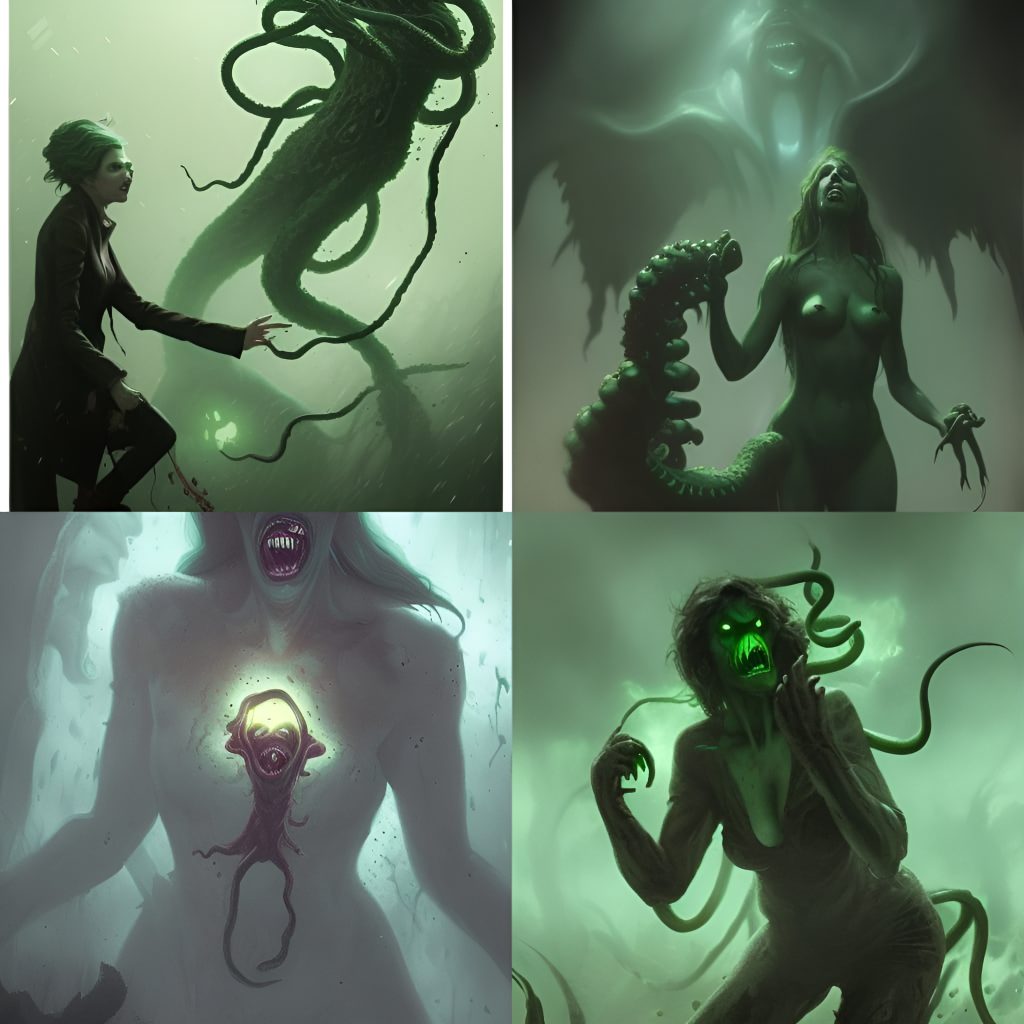
Painted in green–lithe and naked–Mokodian priestesses speak of an unbalanced creation against life by a cold and uncaring universe. They speak of vicious, arrogant Old Gods demanding worship and sacrifice from starving, struggling men, women and children, and enforcing this through an old, inhumane Covenant.
These priestesses explain that the blessed Enian Zaru had looked around her and saw her children–life in all its forms–surviving despite the odds. She saw her children surviving despite the Old Gods. Her were children surviving despite the elements. These same elements that gave so little and yet took so much.
She saw this and wept. Unlike cold, unliving elements, life can feel pain and, at this moment, the Saviour’s mind was made up to help her children.
First, she showed mankind the wonders that nature could provide–from hunting to berries, from bees to flowing rivers–before teaching them how to cultivate this consciously from the land as farmers that bend this nature to their will. She showed them how to irrigate fields, store grain and, even, brew alcohols and stronger tinctures for all the ailments that affected them. With nature’s bounty in their warehouses, she began to show them deeper wonders, from biology to the wondrous birthing of life and the river that flows forever in her ná providing endless life that would, eventually, overcome the Old Gods’ oppressive rule.
But the Lez Enian Vav had found out how she had helped mankind and, in jealousy and rage, they had banded together to banish her from the world of men. Uncaring of how many were killed in the ensuing conflict, the Old Gods had fought against the enlightenment of mankind and, ultimately, cast the Saviour from the world before abandoning it themselves.
But the Old Gods could not erase the knowledge that men had gained. Indeed, after handing their absolute power to an arbitrary and unequal few, the Old Gods in their arrogance and casual cruelty had just abandoned this world to its own devices.
Those families that the Old Gods had given their power to had ruled over the rest of men by force in a harsh and cruel monarchy. The common man had no voice in this rule and those without the Gift were considered lesser to those with the Gift. Unable to accept this arbitrary rule, the free men and Followers of Enian Zaru fled into the cold, harsh lands of Mokodia to build their own, fairer and more equal society.
In Mokodia, armed with both the knowledge the Life Elemental had imparted and the freedom to explore it, the Mokodians delved deeper and deeper into the study of life, science and the world. From steam power to electricity, from the science of metals to that of other substances and materials, from guns to aeroplanes… The Mokodians‘ built their kingdom up from the ashes of their defeat–not bowed by the elements but harnessing them–and their lands swelled upon the firm foundation of sciences and progress, under the belief that all men were equal and should not be judged by their birth, but by their words and deeds.
IV: The Age of the Water Wizard
Watered down over thousands of years, the Gift has become rarer and rarer in the Enian elemental bloodlines. While the Fire Wizard descendants still rule, this rule is reinforced more by brutality than legitimacy. Most Gifted bloodlines of the Enian now exist only in name, the elemental powers long having been diluted to nothing while the reliance on these Gifts stunted all other endeavours to find other solutions and progress other knowledge. Indeed, much progress is banned for fear of it challenging or replacing those in power.
Perhaps because of their fringe existence and the rest’s dismissal of them as inferior, only the water wizards retain clear bloodlines and continue the Old Magic as part of their daily feudal farming.
Into this decaying kingdom and in the shadow of the Garazuzz Mountains, a brutal rape of a farmer’s wife–a descendant of a distant water wizard line–by an entitled fire wizard led to the birth of a baby girl. Growing up in obscurity, the girl is taken during a Mokodian-led slaver’s raid across the mountain and forced into slavery in the growing army of Mokodia to maintain their vast metal machines.
Having rebuilt itself stronger, Mokodia’s borders are now pushing over the Garazuzz Mountains seeking greater resources and more fertile lands for building their machines and the swelling numbers of their ranks. Despite its decaying core, the Old Kingdom of Enian pushes back and the inevitable conflict collapses into the Second War of Men.
Mokodia’s vast army rolls over the Garazuzz‘s dark slopes and fills its air, as steam drives their death machines forward to meet the defending ranks of waning Enian wizards. But the Gift has fallen far, its dilution is deep and the wizards can do little to stop these vast machines spouting steam from grinding forward into their feeble ranks.
Amidst this chaos, the girl that is now a young woman–born of fire and water–realizes that her Gift is that of both. A rare mingling of Ná and the combination of the elements water and fire, she can control both.
Yes, she has the Gift of steam.
Pulling on this power, she reaches out and, singlehandedly, takes control of the Mokodian steam-powered machine army. Thousands of vast machines grind to a halt and the world holds its breath… Instead of turning it on its masters or even defeating the last, failing Enian wizards, she forces both sides together to strike peace between the people.
“Stop!” her voice, echoing through all the metal throats of all the machines in the shadow and sky of the Garazuzz Mountains, “Stop! This endless war ends now, either in all your death or in none!”
Having seen how the Enian rule the weak and having been enslaved in Mokodia, she understands the hypocrisy of both people. With the vast army of machines surrounding them, she negotiates the Water Wizards, Feváná, as the bridge between these two kingdoms. She will rule from the peaks of the Garazuzz Mountains, overlooking both kingdoms as provinces of the Water Wizards with her as Empress.
The Age of the Water Wizards has started, and the world and kingdoms and men limp back to their lands to lick their wounds and rebuild themselves.
A fragile peace lies over the lands but it cannot last. It never does, especially not when the old Enian bloodlines are treacherously plotting to regain power and the infuriated Mokodians are delving deeper into their dangerous sciences to find weapons that need no fire, water or steam…
Yet these risks are not the true threat to this age.
Unbeknownst to all and nearly forgotten to history, in the deep shadows and hidden in this world’s ancient cracks, the Undying Ones are starting to reappear. In the millennia since the First War of the Elementals, they have been breeding and their endless hunger is growing. In the darkest hours of the night, horrors are again stalking upon wing and limb in treacherous form; rows of razor-sharp teeth seeking flesh. Shadowy men are gathering in secret to worship these immortal beings and Her, as they seek to insidiously gain their own power over life. Indeed, somewhere just beyond this world in a cosmic prison of space and time, the writhing, screaming Undying One is trying to claw her way back into this world and, perhaps–just perhaps!–cracks are appearing in her cage.
After the priest had said his prayers and after the mourners had left, a young David Dartmouth continued sitting on the ground. Sitting and staring at the section of the cemetery where his family–mother, father and sister–was buried. All but him were buried beneath there. Those modest mounds in the earth were the best a squire could afford and, wiping away a tear, he felt ashamed that he could not do more.
The sun had begun to set, brilliant streaks of red and gold mottled the sky, and, still, he sat and stared at all he had known that was now under the ground. All that had been ripped from him so suddenly by the vile creature, the spawn of demons and the beast of evil: a troll.
But why? Why them?
He shuddered each time he thought of what they had endured while he had been away with his master. He hoped–though not with very much hope, as it had been him that had found the bodies–that they had not suffered much at the troll’s hands. Even the bones had teeth marks and everyone knew that trolls liked their meat fresh…
Why!
He should have been there! Why was he not there? He could have defended them with his sword. Should have protected them!
And then he narrowed his eyes and nodded, his knuckles unclenching and stood up.
“You will be avenged,” he said simply and turned to go.
***
David Dartmouth’s sword came to a dead stop deep inside the minotaur’s body. The beast’s roar choked into a death rattle as it slowly slumped down and collapsed into a bloody mess on the ancient maze’s ground.
“My lady, the beast is dead,” he said, wiping the blade off with the minotaur’s course, dark brown fur, “Let me break those chains and I will escort you out.”
She smiled and he surprised himself as, at that moment, he knew why the minotaur had kidnapped her and chained her in his maze. She was the kind of beautiful that bards sung of, artists painted and wars were fought over. Even covered in dirt and grime, her dress torn and chained against a wall in this crumbling maze, her smile lit up the chamber and set his blazing heart fluttering like a scared bird in his chest.
“Thanks, good Knight,” she said, her eyes holding him in their emerald gaze and a coy smile lighting around the edges of her mouth, “I do hope you will not just be escorting me out of this maze, but also home? The roads are dangerous for a lady alone and I would be most grateful for your firm company.”
He scowled, stepping forward to unchain her. After accepting his knighthood, he had eternally been on one single quest. Even today, he was still on the quest to avenge his family as he had not yet found the troll. But, he also acknowledged, he could not in good conscience save this maiden only to allow other evil befall her.
“Y-yes,” he nodded, resigning to delay his quest of vengeance, “My name is Sir Dartmouth and, yes, m’lady, I will see you home safely. Where may it be that you reside?”
He had faced many dangerous monsters by now but the smile she flashed him was a new danger entirely. Old men and many a wives’ tale had warned him of this. All his instincts welled up in him and his heart pounded, but all he could do was stand and stupidly stare at her as she giggled and then spoke:
“Oh, good! Reside? Well, Sir Dartmouth, nowhere near here. Quite, quite far, indeed. Yes, most certainly, very, very far…”
***
“Dear, where are the kids?” his wife asked, as beautiful–but a lot cleaner–than the day they had met in the minotaur’s maze. At the time, little had he realized the significance of what he had saved that day: love. He suspected that she had been a lot quicker to realize this little fact than he had.
“Oh, Lady Dartmouth, I think they are out in the garden, playing?” David Dartmouth answered, puffing his pipe and not looking up from the newspaper in his hands, “Why?”
They had fallen in love–and, perhaps, a little more than that–on that long journey back to her father’s castle. She had taken him the long way there and he had not resisted. They had fallen so deep into love that when her father had asked him to name his reward for saving his daughter, he had immediately asked for her hand in marriage.
Given his good family and his standing as a knight, there had been little resistance to this request and, well, the rest was their three, happy and healthy children now.
He could not change his family’s tragedy–sometimes he even visited their old graves–but a life squandered on tracking that single troll down and taking vengeance upon it would also not bring them back. His father and mother and his sister would all understand. He was sure. Lady Dartmouth had helped him realize that; she and her tender love, and the three beautiful, vibrant children she had born him…
Though sometimes he did brood on his loss and wondered what became of that wicked troll, he would not change a thing in the world. He was–they all were–happy.
After all, he often thought, the best revenge is a life well lived.
“I think you should go check on them,” she said, sipping her tea and reading her book, “I heard some shouting and they may be playing too rough. I think Junior might have pushed his little brother too fast in the go-kart and had a tumble again? They keep leaving that bloody go-kart lying around… Please, dear, go see to them.”
He pulled deeply on his pipe, its bitter-sweet tobacco filling him, as he folded and placed the newspaper beside his chair. He stood up, stretching–a cloud of smoke blowing from his lungs–and, on old impulse, reached out and took his old knight’s sword off the wall. It was still as sharp as the day he had slain the minotaur and won his love’s hand in marriage.
“Sure, love,” he nodded, sighing a little, “I have my sword so they know I am serious. Their father is a knight and they best act accordingly. It’s all rough and tumbles until someone loses an eye or pokes a troll.”
His wife snorted, blew him a kiss that he returned, and then went back to her book.
***
The moment he got outside, David Dartmouth knew something was wrong: the garden was silent–no birds or insects anywhere–and his three children’s pale, frantic faces put ice into his heart. Toys abandoned and scattered across the lawn, all three children were running full tilt from the dark, depths of the small estate’s gardens up towards him at the front door.
Slowly, their shrill voices began to reach him but the large looming shadow parting the trees made their communication redundant.
It was a troll!
“DAVID DARTMOUTH!” the Troll boomed out, pushing over a tree as it lumbered out from behind them, “DAVID DARTMOUTH! I WILL NOT LIVE IN FEAR OF YOUR PRICKLY LITTLE SWORD SLITTING MY THROAT WHILE I SLEEP. I WILL BRING YOUR VENGEANCE TO YOU NOW AND, IN YOUR DEATH, I WILL BE ABLE TO SLEEP PEACEFULLY AGAIN!”
He went cold. This was the troll. The same troll that had slain his family all those years ago, and it was here to finish things!
His knuckles went white around his sword. It’s weight comfortable with old instincts kicking in. He was running and shouting at his children passing him: they must go to their mother and hide! He sped passed them without a glance, focusing on the monstrosity stepping onto his lawn. And, before he knew it, he was standing in the middle of that lawn, sword raised pointing at the Troll, shouting in his old, military voice:
“You! You! You dare threaten my family you spawn of wickedness! You shall leave now, never to return, or I will slay you where you stand!”
The troll stopped just after the line of trees at the bottom of his garden, it’s head in line with the very tops of them. The beast threw its head back in vile laughter, clutching its sides and wiping a foul, green tear away from its wrinkled, grimy face.
“SLAY ME? SLAY ME! LITTLE PUNY HUMAN, I WILL SIMPLY STOMP ON YOU BEFORE I CHEW YOUR FAMILY’S BONES!”
And with that, the Troll stepped quickly forward. Perhaps it was the old, pent-up paranoia about him hunting it that exploded into reckless action? Perhaps it was hoping to move quickly and catch him off guard, or perhaps it was just too big a being to look at little children’s toys on a front lawn? Whatever it was, the Troll’s quick step forward landed its foot on top of Junior’s go-kart.
The go-kart slipped right out from under the Troll, its foot with it. More a moment that lasted an eternity, the Troll’s balance teetered on the brink before it slipped into an awkward, forward lunge that toppled the beast forward and on to its face.
Its face, right next to David Dartmouth!
He darted forward and–with every ounce of his late-middle-aged strength, all the sorrow and rage of his lost parents and sister, and every instinct to save his family in the house–he rammed his sword deep into the Troll’s bulging, unprotected eye. He plunged the sharp blade so hard and so deep until even his forearm was embedded and the point of the aged, well-used blade pierced deep inside its monstrous skull.
And, as the Troll that had torn David Dartmouth’s young world apart and threatened his current one breathed its last, foul breath, he leant forward and whispered in its ear: “I forgive you.”
“Sophia Morrow, what did you see when you looked at yourself?”
It was a simple enough question but she froze, unable to answer. She felt trapped, pinned down by the unyielding grey eternity. Where were they? How had she gotten here?
“I–I, uhm, I saw red hair on porcelain skin, I think I looked quite good, actually?” she answered, pulling her gaze from the endlessness around them and looking at the speaker. A man? At least, she thought it was a man but was unable to even see a face underneath the cowl. In fact, the Robed Man could well just have been a robe floating in front of her.
It was silent. Was he perhaps contemplating her answer, perhaps entirely something else? The nothingness in this place made her queasy and was starting to play tricks on her perception.
“No,” the Robed Man suddenly spoke up in his hollow, low voice like stone creaking under the weight of time, “No, that is the wrong answer. You have to do it again.”
“Wha–“
***
“Sophia Morrow, what did you see when you looked at yourself?” the Robed Man asked.
She remembered this question, she thought. Or was it a memory of a dream? She had those sometimes. But, no, she was sure she remembered this question…
And then she realized the nothingness around her! Grey and vast, her form floating in the belly of eternity as unnoticed as shadows at night.
“I–” she paused, suddenly feeling terrified. She had gotten this wrong before. More than once, and each time she had to go back. Back to that place! There was so much pain there! “I–I saw opportunity and loss, successes and failures. I saw things I had done, things I should not have done, and things that I had not done or could not do. I saw a past that was written, a present that was being lived and a future that could be chosen. I saw life.”
She smiled, her memory was coming back to her. She had been in this place many times before but she was sure she had gotten it right this time. She was sure.
The Robed Man was silent, a gentle, unfelt breeze moving his garment. Yet, all around them, there was literally nothing. Silence. Endless. Grey. Eternity…
And then the Robed Man shook his head and said, “No, that is the wrong answer. You have to do it again,” and she was flung back into the world to learn the lesson she had not yet learnt.
***
“Sophia Morrow, what did you see when you looked at yourself?” the Robed Man asked.
She was ready this time. Maybe she was finally adjusting to this cycle or this place, and her memories from all her other lives came back to her quicker?
She looked at the Robed Man and paused. Was it for just a moment she paused or for a thousand years? Time was hard to track in this grey formless place.
Her thoughts were torrents pouring over themselves. Analysing her previous answers and looking at her previous lives, her thoughts raged onwards. What was the lesson she was missing? What had she seen? What was there to see? What had she gotten wrong? What had she learnt? What had she been? What?
And then it popped into her consciousness, gently like a small bubble bursting. It was a single, clear and unequivocal thought. She paused, considered it, and continued.
“When I looked at myself,” she began, picking her words carefully, “I saw myself. Nothing less and nothing more. Myself, as that is all we can be.”
Silence, and then, “Yes,” the Robed Man said flatly, and she felt a rush of relief and joy like she had never felt before. And–strangely and unexpectedly–she felt a small sense of loss. She may never see the world again. She may never get to be born again. She would never grow up and love and share and cry and fall and rise again. Never, and it made a small part of her immensely sad.
But the Robed Man continued, “And, Sophia Morrow, what do you see when you look at yourself now?”
Sophia narrowed her eyes. This was unexpected but she had never gotten this far before. Then it struck her. It felt like a thunderbolt to her soul as the realization hit her. Not once questioning if this was the right answer, she answered:
“Oh Death,” she began, smiling. Her soul felt one with infinity, at peace with eternity, and touching all that is, was and will be as it touched her back, “Like a chip of rock chiselled from the whole, we are each uniquely ourselves, but like that same rock ground and mixed together with the rest, we can be recast into any form as the whole and the whole is us. Like a drop of water, we are unique, but, like a drop of water, we came from the ocean and we return again to the ocean where we are both still the drop of water and the ocean. We are all part of the whole and the whole is us. So, Death, oh sweet Death, what I see when I look at myself now is everything for I am everything.”
And then Death smiled.
“The first lesson is that of the Individual, unique, flawed and beautiful. The second lesson is that of the Whole from which the Individual originates from, returns to and, indeed, entirely is.”
“Now what?” Sophia asked, smiling.
“As I have done with you,” Death spoke, seemingly picking his words carefully as if he had never said this before, “Now you get to teach this to another soul.”
And then Sophia Morrow was alone in the grey eternity.
Death was no more, and, wrapped in eternity and infinity, Sophia turned around and faced the naked newborn soul that had appeared before her wide-eyed and terrified. She smiled. She felt so much love for it! And she panged with sympathy and sorrow at quite how hard and painful the soul’s road would have to be.
But, like her, this soul must learn the lesson before moving on.
“Andrew Brooke,” Sophia knew exactly what to say, “what did you see when you looked at yourself?”
“Can you see it, Little Light?” her mother asked, squeezing her hand as they looked in the mirror, “If you look with your heart, you should be able to see it.”
She squinted her eyes and focussed. It was dim in the gas station toilet and the mirror was grimy and cracked on one side. She clenched her jaw and willed herself to see it–
And there it was! The darkness around them peeled away and a light that was not a light glowed around them. And, just behind her and her mother, silvery, ethereal wings fluttered gently.
“I can!” she exclaimed, excitedly, hugging her mother and then quickly turning back to check she could still see herself in the mirror, “I really can, mommy!”
Her mother smiled and bent down, putting her head next to her daughters and looking at both of them in the mirror.
“These are our true forms, Little Light,” her mother whispered, a sadness creeping into her pale blue eyes, “Our eternal forms from the Old Lands. So, Little Light, never forget this. When this world’s darkness closes in–and it always does; our true selves are immortal but these human bodies are not–just remember that none of this matters. None of this dreadful, dirty world of men matters and, my dear, you are the light and–“
A glass bottle shattered the moment against a wall outside. The sound of the city rushed back in and an angry voice rang out from the other side of the door. Her mother froze, her smile vanishing completely. She stood up slowly and looked at the door for a moment before looking back down at her.
“Your father is waiting. We must go, Little Light.”
***
When the first shovel of dirt hit the casket, it sounded like a door slamming shut. Forever. The second shovel of dirt echoed her mother’s rasping breath at the end, in between cigarettes and whisky. She remembered carrying her to bed before her own night shift began and, by the third shovel of dirt, her mind had already shifted to worrying about paying last month’s rent, let alone this month’s.
Following her mother’s will, she had made sure that the casket was made of oak and not an ounce of iron–not even in the nails–was in it. She had also made sure that the funeral was held at dusk, and, later, she would make sure mushrooms and foxgloves grew around the plot.
“This is so depressing, babe,” the man beside her moaned, badly hiding a yawn behind his mouth before reaching into his pocket for a cigarette, “If we leave now, we can hit the pool bar before the happy hour ends. Bertie says he might have a job for me, or something.”
She wanted to hit him. She wanted to run away. She wanted to scream and cry, but all she did was sigh and kept watching the men filling her mother’s grave. At least he was here. That was something. No one else was here, including her father. She had tried to call him and had mailed him an invite but to no avail. He was probably in jail or drunk again. Perhaps both.
Eventually, she looked up at her boyfriend and tried to smile. He tried to look sympathetic. If he is trying, it means he is, she reminded herself. He flicked away the cigarette he had finished and hugged her. His arms felt good around her.
“Sure, hun,” she mumbled, “let’s go get that drink. Maybe Bertie does have a job for you.”
***
“Can you see it, Little Light?” she asked her daughter, “You need to look with your heart, and then you will see your beautiful true form.”
She lifted her daughter to the counter in the bathroom. She was small and light, probably too small and too light for her age. The light in the MacDonalds was flickering but she could see her daughter squinting intensely at herself in the dirty mirror.
And then her daughter’s face lit up, “Yes, mommy! I can see it! It is amazing! We are so beautiful! So beautiful!”
She smiled and hugged her daughter tightly, whispering about their immortal souls and the beauty that cannot die. She whispered about the Old Lands and how their people had fled them. She whispered about oak trees, foxgloves and circles of mushrooms. She whispered about how this world was not real and how only this light was, and, the whole time, she wondered if she could still see it.
“Yes, wife,” Theodore ‘Teddy’ Hoodwink Samuel mumbled, patting his Caballus’ hand as they walked under the eves into the packed Aeonian Ball upon Mount Olympus, “I will be sure not to embarrass you, dear. No, I won’t drink too much wine–“
Teddy kept mumbling affirmations, half listening to his wife’s litany of instructions for the evening. They were at the top of the world. In fact, just above the world here; Mount Olympus overlooked the mortal world and the palace at its centre overlooked Mount Olympus. It was awfully fancy.
Around them crowded the mythical world: centaurs flexing their muscles and stamping their hooves, satyrs lounging around, winking at anyone they thought they had a chance to bed, a flash of white showed a pegasus somewhere while a wide birth naturally formed around a sphinx and a minotaur that were deep in heated conversation to their right.
But these were rabble compared to the divine members of the Pantheon that had gathered there. Each great god and goddess of the Pantheon had a circle of sub-mythicals that had formed around them sycophantically trying to gain their favour.
With the roar of a stormy ocean, Neptune’s voice boomed out around a circle of tittering nymphs regaling some or other tale of his power. His boastful tales were only ever outdone by Mars, who had surrounded himself with a noxious bunch of harpies and sirens who gazed up at him in awe as he, no doubt, told them some story that ended in him killing something. Mars always ended up killing something.
The attention-seeking Apollo–ever dramatic!–stood on a chair and was making grand gestures to his crowd, no doubt reciting some poem or making some vast, world-shaking prophecy. Wherever there was Apollo, he was sure the Three Fates lurked; an overly-dramatic bunch, the Three Sisters always had a respectful crowd trying to garner favour and hoping for a good prophecy or two about them.
Not to be upstaged in their own home, Jupiter and Juno sat above the masses and on their golden, not-so-subtly-raised thrones, casting their gaze on their subjects below. Far below, just how they liked it.
“Yes, dear,” Teddy sighed, what were they doing here? He was the God of Irony and his wife was the Goddess of Arguments. Not exactly powers likely to shape the course of history or be involved in world-shaking prophecies. Little gods like them were often the nieces, nephews, second cousins and distant relatives of this pretentious bunch but, tradition dictated that family was always invited for these occasions. Gods lived a long time and family was important.
“And, Teddy,” Cally droned on, her red hair bellowing behind her and her sharp eyes shooting daggers at all their marginally fancier relatives mulling around them, “It is also very impor–” she froze and Teddy felt her grip tighten on his, snapping out of his gloomy contemplation and he looked where her she was looking.
Her sister was standing there: Influffi, the Goddess of Clouds in a flowing white dress with her husband, Oblivus the God of Forgetfulness, stood before them. Oblivus’ robes were inside out and he was looking wide-eyed around him like this was the first time he had ever seen the inside of the Palace. It was not. Influffi was absentmindedly inspecting a glass of wine in her hand as if she had forgotten what it was for.
“Hello, sister. I hope you are well,” Cally managed to make the greeting sound like a curse, “I am glad you found your husband,” she added as an afterthought, which triggered a slightly confused look on Oblivus’s face. He had been lost–technically, he had “forgotten where home was”–but it had resolved peacefully when he had simply turned up back at home. No one–not even him–appeared to know where he had been.
Not exactly world-shaking prophecy stuff, Teddy thought wryly, but at least he made it home peacefully.
Well, almost peacefully. Teddy gulped and tried to smile politely while ignoring that the last time he had seen Fluffi, she had ended up with decidedly less clothing on. At his wife’s direction, he had gone to console her about Oblivus’ absence and, well, wine, bad judgement and irony had gotten involved. His memories were fuzzy about the exact details but his wife was quite certain that she knew everything.
All water under the bridge, he tried to convince himself, but he knew better. Cally had forgiven him but not forgotten.
“Oh, Cally,” Fluffi exclaimed, her expression flowing into a warm smile, like the sun breaking through the clouds, and she threw her arms around her sister. Fluffi was a truly malleable, flexible person. Teddy could feel his wife stiffen just before she let go of his hand but when he looked up, he saw a flash of happiness on her harsh face as she embraced her sister back. They had always been close sisters and a stab of guilt pained him at his indiscretion.
Teddy nodded at Oblivus, who crinkled up his face like he was trying to recall who Teddy was. Or maybe he was angry too? Or he was angry but he had forgotten why? Sometimes Teddy wondered if Oblivus remembered that he was the god of forgetfulness. Ironic.
In a mild panic at the moment, Teddy coughed and muttered about getting everyone some wine before scampering off, dodging a lumbering minotaur. He hoped it would take a long time to locate wine but, at that moment, the arrival of Bacchus with all his party friends indicated otherwise.
Teddy sighed. It was going to be a long night.
***
“…and then legionnaire’s wife came home, but Teddy’s protection still held true!” Cally finished her story, her and Fluffi roaring with laughter, even Oblivus was laughing, “Ironically–yes, dear, I am going to make that pun!–Teddy cannot cast his little blessing on himself! Bad for him but good for me!” Cally was wiping tears from her eyes, staggering on her legs, and Fluffi buried her face in her husband’s chest as both of them held their sides from eruptions of laughter.
Teddy managed to crack a smile. He did not find the story as funny as apparently everyone else did, despite being involved in it. He gulped down his wine and filled it up again quickly from the nearby amphora.
At least the wine was good, and all of them had had plenty to drink.
“Yes, well,”,” Fluffi, changeable as ever, flowed straight onto the next topic, “What do you think the Big Prophecy of the evening will be? There always is one at these Balls. Maybe something to do with Venus? She hasn’t featured much these days…”
Teddy snorted, “She’d be one of us Little Gods, if she hadn’t slept with Jupitor and wasn’t so beautiful,” his wife’s hand tightening on his made him realize what he had said. In a panic, he kept babbling on, “But, well, you know, it won’t be any prophecy about one of the Little Gods. No Prophecy of How the Corners Met, or How Clouds Changed the World, or like… Hey, wha-what? Why is everyone so quiet!?”
He stopped. Confused as his sphere of awareness expanded from the three people he was talking to–whose faces had just gone deathly pale–to the whole ballroom in the Palace that had gone absolutely silent.
“What is going on!” he said, looking around when, through a clear parting of the crow, he saw the Three Sister pointing in his direction. The hair on the back of his neck was starting to rise. No… No, they were pointing directly at him!
“The Destroyer of Worlds, the Ender of Olympus, the God that is not a God!” all three of the Three Fates were dramatically proclaiming together, their words harmonizing as they all pointed at Teddy. Mythicals love a good prophecy and the crowd of gods, goddesses and magical beings were hanging on their every word, “He will bring an end to our world, changing all things by changing nothing! He stands there, the vile Bringer of the God-slaying Apocalypse!”
And then things began to happen very quickly.
Rage exploding across his face, Jupiter was rising from his throne, his thunderous voice booming out, making the walls of the Palace shake as thunderclouds began to appear and lightning flashed out. Apollo was leaping forward, declaring that he had seen the vision too! Juno was waving at the Palace guards as the crowd surged forward, none too friendly. A spear suddenly in hand, Mars began to push through the crowd shouting about killing…
“Run, dear, run!” Cally–Goddess of Arguments and the Sayer of the Last Word–whispered as she pushed Teddy away and stepped in front of him to face the descending hordes, “Now wait a second, you three sisters, we need to talk–“
Teddy was a lot of things but brave was not one of them. He was already out of the Palace and–under fast-growing thunderclouds flashing lightning–he sprinted down Mount Olympus before he realized what he was doing.
***
The ground next to him exploded from a bolt of lightning, raining jagged chunks of Mount Olympus on him as he ran. The air smelt thin and he could taste copper at the back of his throat. Was it blood? He could hear the hooves of the pegasuses pounding down the sky just behind and above him. A clap of thunder rattled his bones and another lightning bolt hit somewhere else. There were shouts from behind him and a spear shot over his head splitting a boulder some yards ahead of him.
He put his head down and kept running!
Why is this happening!? He could hear his inner voice whining but the cries of the gods and goddesses hunting him drowned that miserable voice out. Why!? Just behind him, he could hear the bellow of a minotaur charging, the clang of metal and another bolt of lightning lit up a tree to his right, temporarily blinding him.
Unfortunately, that also meant that he did not see an awkward stone, and his foot caught on it. He tumbled forward, shrieking, and rolled, his momentum carrying him further and further down the steep slopes of the mountain. Rocks cut him and bruised his soft parts and the last thing he remembered before the darkness took him was an image of Mars charging–spear retrieved from the rock–bearing down on him with murder on his face.
***
“…be anyone, really, as the world is full of not gods. Isn’t that right, Nona? Nona, isn’t that right?“
There was a pause before a begrudging grunt of agreement came.
Slowly, the world came back to him: light, form and shape, sound crept in and then the pounding head hit him. He lifted a hand and the touch prickled with pain where he had obviously hit his head rolling down the mountain. He licked his lips–the bloody copper taste was still there–and lifted his head to a strange scene.
His wife was standing over him with the consort of heaven looming over her and shooting murderous looks at him. Mars stood off the side with a bizarre frustrated look twisting his face, placidly poking the ground with his spear. Apollo was there too, shaking his head. Wreathed in light and with a shared expression as if they had just eaten something bad, Jupiter and Juno stood in front.
No, not quite in front… In fact, Cally stood facing the Three Sisters with the hordes that were out to get him behind them. And, what was even more unique was that everyone was just listening. No one was trying to murder him.
“And, if you are honest and not dramatic about it–no one likes an attention-seeker!–Decima,” Cally was saying, wagging a finger at the Three Sisters, “and are more careful which words you use in throwing around these ‘Prophecies’–” Teddy could hear his wife’s inverted commas and sense the collective silent gasp that everyone did not make at this insinuation, “–Teddy’s name did not actually feature anywhere in this ‘Prophecy’, did it, Decima?”
Blushing and dropping her gaze to the ground, the middle Sister mumbled something while poking a rock with her toes.
“I am sorry, Decima, please speak up. What did you say?”
Decima coughed and looked up. Ignoring her red face, she then spoke in forcefully flat tone, “No, Cally, no it did not, but, it’s like, the Prophecies are more feelings and we as feelings we know–“
“Right, well, we cannot go accusing people of horrible things based on your feelings, can we,” Cally cut Decima off and moved on to the next and final Sister, “And, thus, Morta, there is absolutely no evidence at all that suggests my dear, sweet, gentle, somewhat-dumb husband will end up causing the end of our world and destroying anything at all. None at all. You do agree, don’t you, Morta?”
Morta blinked, looked at her two sisters, who avoided making eye contact, and then very slightly nodded before dropping her gaze and trying to sink into the ground.
“Right, then it is agreed,” Cally firmly declared, casting her gaze across the gathered gods and goddesses who all were suddenly inspecting the ground or their fingernails, “This was all just a big misunderstanding and we should not be so quick to jump to conclusions before trying to murder someone. Not least of all, murder family. Come, dear, get up, let’s get you home and mended up. We’ve had quite enough of this age’s Aeonian Ball.”
Teddy fumbled his way up, his wife helping him, and they turned to walk down the mountain. Already some of the gods and goddesses were starting to wander back up the mountain. There was still wine, dancing and orgies to be had and, honestly, they were never actually going to kill Teddy… Maybe Mars would have, but not them! Never. It was just a misunderstanding and the Three Sisters needed to up their game, sort out their ambiguity and, perhaps, take a course in logic.
Somewhat supporting his weight on his wife, Teddy stumbled down the steep, ragged slopes of Mount Olympus. The two of them walked in silence for a while before Teddy looked behind him and saw that no one was following. He squeezed his wife’s hand and she squeezed his back, but then a thought struck him.
“Ah, dear,” he began, tentatively, “the Three Fates are never wrong. How did you do that?”
Cally smiled and looked at him with her sweetest look, eyes sparkling, “The Sisters may be able to tell the future, dearest one, but they aren’t the Goddess of Arguments. Logic is not their strong suit!”
He blinked and nodded, shaking his head. He knew. He had lost many arguments with her over the ages… And then another thought struck him! This thought felt like one of Jupiter’s lightning bolts as it shot down his spine, his skin grew cold and a dark pit appears in his stomache.
“Then I, Theodore Hoodwink Samuel, God of Irony, will indeed end our world,” he breathed out in shock and horror.
They had stopped walking and his wife turned to him, deep concern on her face and tears appearing at the corners of her eyes. She reached out and hugged him tightly, and he hugged back as if clinging to the edge of a cliff overlooking the abyss. The pit in his stomach was growing…
“Yes. Yes…” she whispered, tears suddenly streaming down both their cheeks as their embraces grew tighter and more desperate, “Yes, Teddy, you will, and, I guess, after all, that is the irony.”
Far below, she watched the aristocrats and patricians swarm in, out and around the centre of Rome. Their white tunics and red sandals differed them from the drabber toga colours of ordinary people, but their actions and words distinguished them even more and these were what attracted her to them. Or them to her. She could never decide though she would pretend to know if anyone ever asked her.
“You see, my sister, Veritas,” she spoke over her shoulder, her gaze never leaving the bustle below her, “believes in truth, is truth and all it represents. How very noble, and ignorant of her,” she chuckled under her breath–Veritas was actually her cousin–and continued speaking, “How little she understands the human condition. Human society does not exist despite falsehoods, but because of them. We have happy relationships because we hide nasty truths from each other and ourselves. We have peaceful societies because we lie about royalty, class and privilege to each other. Truth is a prison–immobile, unmalleable and impersonal–while lying is the key that frees us from it and allows us to be who we want to be.”
Far below, aristocrats spoke quietly together, every second word a lie, half-truth or omission. Patricians exchanged falsehoods and insincerities below to gain position and power. Everyone with every breath in every moment and with every word added to the body of lies underwriting society.
“I, on the other hand,” she eventually broke her gaze from her ignorant worshipers and turned to the listener, “I see society’s true character: untruths and lies. Not a big lie, not a horrendous one, just countless little lies all stacked up precariously on one and another.”
“You are Parum Vera, Goddess of Half-truths and Little Lies, Patrician of the Patricians, Whisperer of Greyness and Mistress of Makeup.”
The being that stood before her was hard to look at; not ugly or hideous, but physically hard for you to make your eyes focus on it. If you did not actively concentrate, your eyes slid off its image and your mind wandered. With immense effort, though, if you did manage to focus on it for even a few seconds, whatever you saw was fleeting and left your mind the moment you looked away, leaving you only with a strange sense of hollow vastness.
Parum Vera smiled, a strangely insincere act on her somewhat round and pouty face, and nodded, “Yes, just call me Vera, brother. And what can I do for Ignotus , the Being of Distraction?”
Ignotus smiled, or at least Vera got the feeling that he smiled. Even for a goddess–albeit one of the minor goddesses–she visually struggled with Ignotus. She only called him ‘brother’ because she had to call It something and they were related. Truth be told, she had no idea what It was, but, truth had never been her strong point, so she kept to her story that It was her brother.
“I have an idea for something glorious and I need you to convince the mortals to build it.”
***
His joints hurt and no amount of wine seemed to dull the ache. Vast splendour surrounded him but, in his early seventies, it had also cost him a lot. First, subtly, and then in open civil war, he had worked his way up from equestrian to senator and, finally, to Emperor, but all things came at a price and he now was in the sunset of his life.
A lifetime to get here, but what did he want to do with it? His joints ached and he felt tired. All the power in the world and all he wanted was wine, a hot bath and a good night’s sleep.
Emperor Vespasian sighed and took a long sip of his wine as the man before him droned on. The Rationibus or royal accountant of Rome was a strange, balding little man with slightly bulbous eyes who had served under at least three of the four emperors during the Year of Four Emperors. A dubious track record, at best.
He did not like him but he did need him. The Empire was large and needed to be organized.
The numbers droned on and the wine slid down his throat. He rubbed his knees and leaned back in his gilded chair. What should he now do with his power? What legacy could he leave–beyond this position–for his two sons? How would history remember him?
Suddenly, he realized that the Accountant had stopped talking and was looking carefully at him. He cleared his throat and nodded, and the Accountant smiled.
“Perhaps, Emperor, could I step beyond my duties and make a suggestion?” the Accountant continued without waiting for his agreement, “Following your successful siege and subjugation of the rebel city, Jerusalem, we have a plentiful supply of slaves and your treasury is well endowed, yet the people grow increasingly irritable and restless. The late Nero had embraced them on his estate and, while however despicable and dangerous such an act is, it has left a vacuum that could be useful. Too many slaves collapse the price of slavery, too much gold creates unhealthy desire, and the peoples’ restlessness combines with these to make for a dangerous civil union…”
The Accountant paused here and narrowed his bulbous eyes, obviously trying to see if Emperor Vespasian was following his hints. Whatever he saw satisfied him, and he pushed onwards eagerly.
“What if we were to turn Nero’s old estate–where he let the common people walk–into a vast entertainment building? When built, we could stage entertainment for the masses and, as it is being built, it would draw on many thousands of slaves–keeping this market healthily tight–while also obliterating Nero’s toxic legacy with your own improved one….”
Emperor Vespasian smiled! His mind was suddenly racing.
“Yes!” he said slamming his wine down and a grin spreading across his face, “We will build the Flavian Amphitheater! We will tear down that stain on the city, the Colossus, and make mine in its place! A great idea!”
Of all the ideas from all the aristocrats and patricians, it was his accountant that had solved his legacy for him. He would build!
In the moments that followed, Emperor Vespasian did not stop to think where his accountant could have come up with such an idea or what–or who–had been the inspiration for it…
***
“Six thousand slaves, ten years and much more gold later,” Ignotus growled, smiling, “and we have the Colosseum. I would ask you how you influenced the mortals to build it but I am not sure you would tell me the truth, sister.”
At midnight beneath a full moon, they both stood on the top of the concrete stands looking down on the eerie circular stage far below them. Soft snoring, growls and an occasional roar could be heard from the cells below it but the stage stood empty and awaiting tomorrow’s show. Empty seats with rigid class order cascaded down from their perch until the floor of the amphitheatre was reached. Here, surrounded by screaming blood-thirsty crowds, gladiators, slaves and animals fought to the death for little more than the onlookers’ entertainment.
“A beautiful plan, brother,” Vera smiled, “and one that I benefit from. This building is built from a lie to a little man, to hide another’s lie and it perpetuates so many of society’s current lies. Even the name, the Colosseum, is a lie, as Emperor Vespasian actually named it the Flavian Amphitheater, yet people and history will forget that, perpetuating the lie. What I do not understand, brother, is what you get from this structure?”
Once again, Vera got a distinct impression that Ignotus was smiling–even grinning–but she had long ago given up trying to see–or remember–any detail of the creature.
“Future poets will call it ‘bread and circuses‘, emperors and kings of civilizations yet-to-come will replicate its model and build copies of it all over the world to host games that people everywhere will faithfully watch, talk about, write about and discuss to the exclusion of all else,” and then Ignotus, the Being of Distraction, the Demon of Diversion, and the Blur of History laughed–a strange, deep, growling static that made Vera’s pale skin crawl–“You, Vera, have tricked the mortals into building the greatest of mass distractions ever invented; years from now they will build stadiums and beam it into people’s very houses and pockets and they will call it: Sport.”
At first, he was not aware of what woke him. Quiet filled the dark room, broken only by the breathing of the naked woman lying next to him. But then, as his eyes adjusted to the night, he saw the funny little man. The plump figure was rocking back and forth on his heels while crouching and staring intently at the inside of his bedroom door.
“Hey–” he mumbled getting up, “Hey, what are you doing here?” He was not worried and did not reach for the sword in the far corner along with the rest of their scattered clothes. The strange man did not look like a thief and, even if he was, he was pretty sure he could best him in a fight.
The strange man jumped immediately to his feet and stared wildly at him, “Par-pardon, my friend,” he began stammering as he wrung his hands and kept glancing nervously at the door, “Pardon on the intrusion, but I am seeking a little sanctuary and thought this room would serve that purpose.”
“I am Spurius of the Third Gallica,” he said, now sitting in bed and looking intently at the nervous little man, “What could you possibly want in my bedchambers late at night? You are no thief nor murderer? You are not even armed, nor does it look like you would know how to use a sword or spear if you had one?”
The strange man nodded and attempted a friendly smile that came out more as a twitch, “Hail, Spurius of the Third Gallica. You are correct that I am not here out of bad intentions. I am hiding from my wife and I just felt that a man like you would understand that. You see, Spurius, my wife is not just anyone. She is the Goddess of Arguments, the Sayer of the Last Word. She is Caballus and she is angry.”
Spurius had drunk wine in the evening but he had not thought that he had drunk too much. Yet his head hurt. Ironic given the situation. He stood up slowly, finding his feet and reached for a leftover partially filled goblet. Almost contemplatively he stared down and it and then swiftly downed it before walking slowly to the corner to get his clothes. He chuckled softly as a thought occurred to him, “It is ironic that the cure for too much of something is more of it, is it not?”
The strange man nodded solemnly but did not answer. He seemed to be waiting for something or some response.
As Spurius swung his crumpled tonga over his shoulder, he began to speak. The Roman military practised and rewarded logic and practicality, and he had come far in his career as a soldier. “As unusual as that story is,” he began as he fastened the toga in place, “if your wife is a goddess, then you would have to be a god–“
“I am the Great Immortal God of Irony, Theodore Hoodwink Samuel, the Gi–“
“What!?” Spurius snorted but then lowered his voice with a careful glance at the nearby sleeping woman, “I have never heard of such a ridiculous thing. In fact, I have never heard of the Goddess of Argument nor the God of Irony.”
“–ver of Chuckles, or Teddy for short,” Teddy ended what sounded like an ironically long list of titles somewhat deflated, “Well, we are the lesser known gods, the Little Gods. You know, the kinda sub-pantheon below the big names. Ignotus the Being of Distraction? Lardum the God of Bacon? Luci the Goddess of Diamonds? Oblivus the God of Forgetfulness? Influffi the Goddess of Clouds? Any of these ringing a bell? Any?“
Spurius stood frozen, his headache slowly receding and his mouth hanging open. He shut it quickly and reached for his sword. The metal was colder than the warm night air and it felt comfortable in his experienced hand.
“Teddy,” he began slowly, narrowing his eyes and slowly stepping forward “Firstly, Teddy is a strange name. Secondly, I have never heard of any of these deities and, finally, suggest you leave my room by the means you entered it else you will leave it another way.”
Teddy’s face paled and he began to back slowly away from the sword-holding legionnaire, “Please, Spurius, I am the God of Irony, but I am also mortal! It is the greatest of ironies, but please afford me sanctuary here just for the night and I will grant you a blessing?”
It was a large bedchamber and the room led out onto a cool balcony. Spurius suddenly felt sorry for the strange man and, since he was up, the wine had tasted good and some male company may not hurt. He tucked the sword under his arm, grabbed a nearby amphora of wine and nodded towards the balcony.
“Sure, Teddy the Mortal God,” he chuckled, “I will grant you sanctuary here until the wine runs out and, in exchange, you will grant me immunity from angry wives. Now, please do share the tales of all your Little Gods with me, I am curious… How do the Hebrews feel about Lardum?”
***
When the door shut, Spurius found himself smiling. Maybe it was the wine. Indeed, those amphorae of wine had lasted much longer than he had expected but Teddy was also much more entertaining than his first impression had created. Quite a talkative guy, actually, once you got a few cups of wine into him.
“Teddy”… What a strange name! All he had said was that it was ahead of its time, which was ironic because when the time arrived when it was correct, they would have all become forgotten.
Teddy had gone on to tell him all about the Little Gods, the sub-Pantheon as he called it. Such wild and wonderful tales! Teddy had told him about how the God of Northern Walls and the Goddess of Southern Walls had met at a corner, or how the Ignotus, the Being of Distraction was so distracting that no one could remember if it was a god or goddess, or something else?
Teddy had told him about how the infuriating Titillatio, the God of Tickling, had been caught in bed with Pluma, the Goddess of Feathers, and how her father had tried to beat Titillatio with a stick. But the stick had exploded into a cloud of white fluff! Indeed, this white fluff still blows through our world making everyone randomly sneeze and attaching to everyone’s dark garments just before special occasions.
Teddy had then turned to a story about how Oblivus the God of Forgetfulness had almost forgotten to turn up for his marriage to Influffi the Goddess of Clouds, and how he had indeed forgotten his vows at the wedding. Luckily Influffi was an immensely malleable woman and Oblivus had merely looked at her and seen what he needed to say.
More recently and, perhaps, more relevantly, Teddy had told him how everyone had just forgotten where Oblivus was!
Of course, Influffi had been distressed about her lost husband, and so Teddy’s wife–Caballus and Influffi were sisters–had ironically sent him to comfort her. At this point in the tale, Teddy had somewhat awkwardly manoeuvred around the topic, but Spurius was fairly sure he knew why Teddy’s wife was angry with him and it had a lot to do with what had transpired while he had been comforting Influffi…
Spurius chuckled as the door closed and yawned. The sun would be up soon and his duties would start shortly. The naked woman remained fast asleep in his bed and, indeed, his wife would be back soon and so–
Bang. Bang. Bang.
Three loud bangs rang on the door just behind him and he froze midstep. He suddenly realized that he had left his sword back on the balcony but he dismissed this thought immediate as unimportant. It was probably Teddy back for something or other.
Spurius swung around, flipped the latch on the door and opened it. He had only a split second to comprehend the immeasurably angry, red-haired woman on the other side of it before she stepped inside and swept the room with a furious gaze.
“Where is he, Spurius? Where is Teddy?” her calm, soft voice was at odds with her face and eyes. Spurius was no stranger to women and, indeed, he always feared when his wife stopped shouting and started talking softly and calmly.
“I-I, he, uh,” he stammered, trying to find his word and resisting an urge to flee, “Teddy is gone. He just had a glass of wine and left, but I do not know where to.”
The angry woman–Caballus, he assumed–narrowed her raging eyes for a moment and then nodded.
“I believe you are actually telling the truth there, Spurius,” she began keeping her voice terrifyingly flat, “Well, mostly the truth as a bit more than a glass of wine was drunk. Teddy tends to do that to wine but, ironically, he often cannot hold his liquor.”
Suddenly, her eyes darted to the naked woman in his bed and they narrowed again with a new, more terrifying type of intensity, “That is not your wife, Spurius,” she said, her eyes snapping back to him!
Spurius felt small. Tiny! The floor was roaring upwards and the walls grew dark as they reached toward the heavens. The red-hair Callabus loomed over him a thousand foot tall, thunderclouds of black smoke and fire raged above her as eyes turned to furnaces and chains sprang from all sides to slither across his frozen, frail limbs.
“HOW UNFORTUNATE, SPURIUS OF THE THIRD GALLICA AND HUSBAND TO DONNA THAT THAT IS NOT YOUR WIFE! HOW UNFORTUNATE FOR YOU, GIVEN MY RECENT EXPERIENCE WITH MY OWN HUSBAND!” lightning flashed from the clouds and struck the looming walls sending chunks of rock flying about him as the wind picked up intensity and the raging being of endless fire reached out to grab his small, chained, mortal form, “HOW UNFORTUNATE FOR YOU–“
Suddenly a blinding light flashed! The chains disintegrated as the walls slid down and the room lightened from eternal darkness to merely mortal night, the raging fiery storm and its wind subsided as the world suddenly felt its normal size again.
Spurius blinked. He blinked again and then rubbed his eyes…
He was alone in his bedchamber and standing at his open, empty door. He must have drank too much wine. There was no red-haired goddess of fire bearing down on him just like there was no longer any naked woman in his bed. Far too much wine! Had there ever been a Teddy..?
And, as Spurius stood there wondering, a soft breeze like the universe exhaling blew out of the chamber and he thought he heard a familiar woman’s voice on it saying the last word: “A blessing against angry wives! How ironic…“
I like to think that I was born in a faraway realm under some wicked curse. My parents loved me–as best as they could–and life was alright in that land–sometimes good, sometimes bad, but mostly fine–but my curse followed me wherever I went.
My curse was ever-present: its flapping black wings hovering over me, casting a long shadow that dogged my every movement, every moment, and every memory.
The Big Black Bird was my curse. Hidden by dark, ancient magic, I could not see it but I could feel its dark presence. Like an intangible weight, pressing down, sucking the warmth out of the room and the joy from my heart; I believe that although no one could see the Big Black Bird, everywhere I went and everyone I spoke to could feel its taint around me.
***
At first, I tried to run from the Big Black Bird.
I left late one night and ran. I ran through wild forests where dangerous animals stalked, but none of them dared come near me and my Big Black Bird. I crossed wild rivers over bridges where trolls hid, but none of them dared stop me and face my Big Black Bird. I drank witches’ foul potions to banish it or forget it or find joy elsewhere, but to no avail and with no effect. And so I fled further across mountains and rugged wilderness where wild elementals and warlocks hurled fire and lightning, but all of them averted their eyes as I passed by.
Everywhere I went and everyone I spoke to could feel the Big Black Bird’s taint around me.
Despite all the running, the Big Black Bird was always there.
***
Exhausted, I collapsed late one night. It was pitch black and, at that moment, I could almost see the Big Black Bird. There was no Moon in the sky. No stars. There was no light in any direction I looked, and the Big Black Bird was so real I could feel it pressing down on me. Its cold feathers and intense, inhuman and uncaring eyes watching my every move…
I cried out to the Big Black Bird to finish it! End things! Stop stalking me and just end my suffering! Why! Why torture me like this!
But the only answer I got in that impenetrable darkness was silence. An uncaring and inhuman silence like only the wicked cosmos can deliver.
***
At this point, I like to think that I fell into a dark and magical sleep. I also like to think that in this faraway realm everyone had a Fairy that watched over them with unconditional love and caring.
She appeared to me in this dream and explained to me that the Big Black Bird–my Big Black Bird–was not a curse, it was destiny that I needed to face.
I awoke the next morning as rays of light pierced the sky. The Sun rose–as it had every day of my life without me noticing–and chased away the lingering darkness from that night.
I smiled grimly and stood up. I knew what I had to do.
***
I climbed the Great Mountain and, at the top where it pierces Heaven itself, I grabbed the Sword of Light from the selfish god hiding up there. I wrestled it from his ancient hold and leaped to earth where he fears to tread.
Wielding the Sword of Light, I carved my way through the darkest dungeons beneath the ruins of the oldest castles where the tombs of ancient knights lie. I found the greatest of them and donned their magical armour; it was light and hard, made from the very rays of the first sunrise itself and forged at the center of the world with unbreakable bonds.
And then, finally, holding the Sword of Light and wearing the Armour of Light, I returned home to where I was born and waited for the Dark Moon. It will appear in the night sky at the hour of my birth and it will summon the Big Black Bird home.
Then and there, I would fulfill my destiny. I would free myself from my curse. Then and there, I would slay the Big Black Bird.
Then everything would be alright, I like to think.
***
But then I remember that I am not cursed nor born in any faraway realm where magic and destiny matter and great acts of courage and kindness and love are rewarded. I am not in a realm where a Fairy loves me unconditionally and is always watching over me.
All that I am is a person lying in a bed and struggling to get out.
My alarm clock is ringing and another empty day is facing me. The dog is barking for me to move–she wants her morning walk–and I can hear an email or message ping on my phone, almost certainly work piling up.
Things need to be done and there is no one but me in my life to do them with no reward other than what I give myself.
And I pause just a moment more… I hover there as the dog is barking, my alarm is ringing, traffic sounds starting up, and sunlight piercing my curtains. Suspended in that moment, I realize that the one thing that remains from my thoughts and the one thing that does exist is my Big Black Bird.
“We would be honoured if you could weave a story for our wedding,” said the boy before her. He hovered awkwardly on his knees. Glancing nervously at his young bride, he flopped forward putting his forehead to the ground in her hut.
“Please, Ma’at,” the young girl added, also bowing, “The Elders speak of your weaves as tying the chaos of the world together into our fortunes and we wish to have many healthy children. Please give us your blessing.”
She smiled and nodded, and later that night her hands flowed rhythmically pulling thread together from disparate forms into a single, cohesive shape that held a pattern. It held a pattern–a story–of youth and love, passion and entwining of lives and bodies. It was a tale that had five children but two deaths and a rich harvest cut short by the coming war. Normal happy lives ending in death. The ending had some darkness in it–as all endings do–but there much light throughout this story.
She sighed and smiled, sadly.
It was not that Ma’at created this tale out of chaos but, rather, that she plucked from the chaos the truth of this particular story and then displayed it in the cloth.
When it was done, she stood up and walked outside. The Moon outside was radiant. Her sister was full and quietly shone down across a dark, rolling desert while glittering off the gently flowing Nile’s silvery streak that cut through it.
She sighed again and peered towards the oncoming horizon. She could see the lights of a young Memphis flickering with fires and candles even this late. Every day, mankind crept further into the desert and, every day, more of her brothers and sisters retreated further away. And, yet, she remained.
Why?
She heaved a final sigh and looked at her hands. One day, she knew, she would have to weave her own story. One day.
***
Ra’s intensity burned down in waves upon the land but the aircon in her car hid her from it. Her dark glasses all but made it disappear. All the power of a god overcome with a device that cools air and tinted glass.
Over the millennia, she had always marvelled at mankind’s inventiveness. Her family were born with their power but mankind has built their own. Almost all the challenges and struggles over the centuries had been solved but, for some reason, mankind just kept on creating new challenges and struggles.
“Drop Ma’at her destination on the left,” the digital voice announced in her Uber drive as the car slowed to a stop beside the curb.
“Thanks, ma’am,” the driver said as she got out, “You have a nice day now.”
“Listen,” she said, turning and leaning back into the Uber, “Take the rest of the day off. Go see your kids and tell your wife you love her. I will tip you well now, so you don’t need to work for the rest of the day.”
“Thanks ma’am!” the driver exclaimed as she shut the door and walked away. He would not take her advice. He would also be dead by this time tomorrow when the blood clot eventually reached his brain. That was another thing mankind was really good at doing: dying.
Her phone beeped as her tip went through while she walked into the gallery. She emotionlessly smiled and nodded at the manager. He beamed at her and tilted his head towards the crowds floating through the airy structure.
The walls were covered with woven patterns meters high. Incredibly complex, subtle and beautiful. They all told chapters of the story of mankind, including some that had not yet occurred. Crowds swooned around; artsy-types and tech billionaires exclaiming on the exhibition and the occasional news crew, blogger or journalist snapping a picture or filming an interview with sentences like “…in a visually-stunning crescendo commenting on the frailty of civilization, the artist known only as Ma’at has woven a tale of apocalypse hanging on the walls around us here…“
“Why is the ending so dark?” asked the Manager, appearing at her side with a cup of lotus tea–her favourite, “Why not something happier?”
She turned to him, taking the tea and sipping it thoughtfully before answering: “Given enough time, everything ends. And, all endings have some darkness in them.”
The Manager nodded and smiled, though she could see he did not understand. He also did not seem to care as his gallery had never been this full. Fifteen years from now, he would die alone from cancer. His wife would be dead in less time than that in another man’s bed. Yet both of them would look back on their lives and consider them to be happy ones.
Maybe then he will get it, she wondered, sipping her lotus tea and watching him as he drifted through the crowd, shaking hands and smoothly working those with money.
Later that night, she stood on her private balcony overlooking the Valley and its twinkling electric lights. A car horn blared somewhere as a soft strand of a pop song wafted by. Sirens flared and faded out. Almost blinded by the artificial light of man, the faint Moon and fainter stars peered down; relics from another age looking at the alien future and trying to recognise how they fitted in there.
They did not. It was that simple. This was mankind’s world now and the Old Gods no longer had any place in it.
The older civilization got, the more lights there were at night. The more lights there were, the less darkness there was. There was also less desert, less sky, less earth, and less of everything else she recognized.
But given enough time, everything ends. This is true of all things, even the world of man. All the darkness they chased away would eventually come back tenfold to reclaim its rightful place.
She sighed and looked at her hands. One day, she knew, she would have to weave her own story. In the meantime, the story of mankind and its ending was hanging on the walls of an art gallery and being commented on in blogs and tweets, trending in hashtags and being auctioned to the highest bidder.
***
When the ash had settled and the skies had cleared, when the fires had cooled and the surviving animals had crept out from where they hid, then she began her long journey home.
She was going back to her desert.
Across the oceans and through young, sprouting forests she travelled. Over blackened lands and passed crumbling skeletons of mankind she journeyed. Sometimes she walked at night, talking to her sisters shining down and, sometimes in the day, talking to her brother’s burning face. Sometimes the cool winds blew–still smelling of dust and ash–and she conversed with the twins, or sudden and violent storms beat down and she yelled at her brother from the North.
Ma’at was all alone in the world but, slowly, she started to feel like herself again. She knew exactly where to look to see her family. They were all around her all of the time. The aircon and sunglasses no longer hid Ra, and the lights of cities no longer blinded Isis’ pale face at night nor her sisters twinkling alongside. She could hear Horus call from the clear skies as Shu and Tefnut danced through her hair, Seth raged far away while Apep once again slumbered, having already feasted on this world…
All around her, the world was starting to look familiar; it was starting to look like the world she had first lived in. The Old Gods were starting to creep back out into the open.
Finally, she arrived back in her desert. The Nile was flowing again and the pollution was receding. Few of the old structures of mankind remained but she did not need them. She knew exactly where she was going.
A small sand dune; that was all that was left of her hut, her home and birthplace.
It did not matter. She smiled as she sat down cross-legged in what would have been the hearth of her hut. She reached out and touched the sand where over five thousand years ago a boy and his bride had begged her to weave their wedding. A single tear fell from the corner of her left eye and she looked up at the golden, bloody sunset spilling across the open sky. Horus’ two eyes–the Sun and the Moon–were on opposing horizons watching her. Ra and Isis, her sisters, a soft breeze and the distant thunder of a hidden storm all combined…
Her family was all around her again.
Ma’at smiled–tears starting to flow freely down her ancient cheeks–and she finally began to weave her own story.
She first met him beneath the Stars in the Age before Man. Those were quieter times and there were fewer words for violence and war back then. The First King had just past and his Memorial Year was proceeding. Renditions of his great deeds and the Ages passed were being sung by bards in the royal courts across the land, but all she could remember from that Age is him.
She had been lying in a field staring at the Stars twinkling down on her. She could see her ancestors there, glittering down at her. He had lain beside her and begun pointing out his own ancestors and describing all their silly quirks and mannerisms. She had giggled and started to point out her own family’s Stars.
He had pointed to a dark spot in the sky–between the great arc of twin-constellations–and told her that he would be shining down from there one day. He told her that he would be waiting for her there; twinkling in the hallowed halls of eternity, he would wait until she joined him.
Even back then, few remembered the Old Ways. Fewer still practiced them.
He had long, brown hair and eyes to match with the olive skin from the East. His hand would reach out to her and she would laugh, gracefully spinning out of his reach as they walked under the Stars. Back then, they would dance the nights away to the starlight’s music, their ancestors twinkling down and the cool wind rustling the trees around them. On the warm summer evenings, they would lie in each other’s arms in the fields of heather below the twinkling tapestry above them, saying not a word and feeling everything.
Those were quieter times and she recalled them fondly but, it was funny, she could not remember much more from that Age. It was all about him; dancing, kissing, loving, and being loved.
The memories were beautiful and full. They were lush and warm. Back then, she recalled the nights were easier and the summers were warmer. Back then, the Stars were fewer, the Moon was brighter and her hands never noticed the cold as much as they do now.
Such is youth that the young waste it. Such is time that it moves the fastest when we are happiest. Such is life that the Ages eventually end.
Elfenkind were not immortal and, eventually, even they feel the passage of time. The First King had died from old age and his son, the Second King, began his reign by pushing back against the creeping wild animals gnawing at the fringes of their ancient way of life.
Unfortunately, some of these wild animals pushed back, and the next Age would see a lot more Stars joining the night sky.
***
There was no Memorial Year for the Second King, nor the Third. And neither of them died from old age. By the time the Fourth King grasped the Oaken Sceptre, the Kingdom was disintegrating around Elfenkind.
While she remembered the fear and gnawing uncertainty of this turbulent Age, she also remembered their betrothal on a warm midsummer night under the Old Oak Tree. With the High Druid gently tying their hands together and the Stars as their witnesses, she could recall every detail of that night like no other.
She could still smell the now-extinct flowers in her hair and the feeling of her loose dress across her thighs. She could still remember his smile as she straightened his shirt and brushed back his long, brown hair. And she could still sense the Stars watching them as they danced and danced.
The dancing was wild and celebratory at first, and then slower and gentler as the dawn came until her head was tucked into his neck, breathing deeply of his scent.
Most of all, she could never forget him moving a single hair from her face and kissing her deeply as they fell to the ground. He had tasted of the summer-wine they had been drinking and, as their bodies entwined, she had felt a hallowed eternity twinkling far above them and the Old Oak Tree.
For her, that Age would always taste like summer-wine, and ash.
Man had pushed back against Elfenkind and the ensuing war had revealed how startlingly adaptable they were. Perhaps because their lives were so short, perhaps because they lack the Elfen history and its lessons, or perhaps it was just fate, but Man took to the art of war as fire to a wick.
Initially, Man had been overwhelmed by the sophisticated armies of the Elfs. Proud and arrogant, the Second King had pushed his advantage but Man had fought back. Then, as the years dragged on, Man had invented more and more surprisingly powerful weapons.
While she would always think longingly of this Age of summer-wine beneath the Old Oak Tree, she would never forget the sound as the bombs began to fall. Like a clock announcing the changing of the hour, the bombs chimed the end of the Ages of Elfenkind and the start of the Age of Man.
***
After the last surviving elf retreated into the shadows, the Cities of Man took root. These dark, gloomy mazes of stone, steel and fire grew and expanded. Their growth consumed entire forests, ate countrysides, drank rivers dry and filled the skies with wretched smoke that sometimes even blocked out the Stars from her gaze.
She remembered the shame and sadness of this Age. The shame of their loss and the sadness of what had been lost.
This feeling was mixed with anger too. Perhaps born from arrogance and likely fueled by vengeance, some of the surviving elfs believed that they should fight back from the shadows and topple the Machines of Man.
She, though, believed that there were already enough Stars in the night sky.
There were rousing speeches by these rebel elfs. The tales of the First King were retold. And, beneath the cover of darkness and under the Old Oak Tree, rallying cries would pull the survivors together and they would drink of the old wines and talk of the glories of yesteryear.
Feeling bold from the wine and safely hidden from Man and his Machines, these elfs would eventually speak of war and violence. They would speak of a war that they could win against Man’s evil. Though she tried to ignore it, her betrothed had lost much and his voice would eventually join the other warmongers.
At the end of each evening when they were lying in each other’s arms, she would try to persuade him to stay. She would try to reason with him about peace. She would speak of all that they had right now but all he saw was how much they had lost back then.
He was not alone in feeling this way. Slowly at first and then quickly in the end, the warmongers won over the surviving Elfenkind and all but her turned towards vengeance and hatred.
Little did any of that matter.
The second war was much briefer: Elfenkind was weaker and Man was now much stronger with many more Machines.
While the previous Age had been one of fire and ash, this Age was one of darkness; complete and final darkness. It swallowed the last them under those Machines and there was little left to bury.
She never found his body. The grief tore at her, crumpling her to the ground below the Old Oak Tree. She wailed and keened until no sound came from her. She cried until her tears ran out, and, eventually, the darkness closed around her.
Not even the Stars twinkled in her darkness, and she fell into a deep, mournful sleep. It was a slumber so sound that the Old Oak Tree gently cradled her in its roots and covered her with its leaves.
***
She did not know how many Ages had passed while she lay beneath the Old Oak Tree in dreamless darkness. She did not know how she had survived nor did she feel any joy in this fact; while numb, her heart still ached.
Suddenly, she stirred one midsummer night. The smoke and pollution of Man had cleared enough for the countless twinkling Stars’ gaze to reach the ground beneath which she lay buried.
One thin, pale hand broke through the ground, reaching for the starlight. Then the next one… Dirt and the ash poured off her as she rose from the ground and looked around.
The world has changed beyond recognition.
The short, brutal lives of Man continued but the men of this Age did not recall the history of the previous Ages. Elfenkind and all their dead, their kingdom, and all the bloodshed had been forgotten by all save some children’s tales and the odd line of poetry.
All the Cities of Man had been absorbed together and the world was now just one, great City with the Old Oak Tree protected in one of its neglected parks. The stone, steel and fire of Man had changed into wondrous rivers, pools and oceans of light and colour. These glimmering lights powered sleek, quiet Machines of awe that flew on invisible wings passed her as the winds of previous Ages…
But–above all else and most unexpectedly–she discovered that the Man of this Age had reached for and touched the very Stars themselves!
In those eternal, hallowed halls filled with the light Elfenkind, Man now flew, building other cities on other planets with other stars…
It was then that she knew why she had woken. She became certain of what had woken her. As the last of her kind, she would make the final voyage.
***
An Age had passed since she had breathed the night air or felt the grass beneath her feet. An Age had passed as she drifted by the vast, celestial bodies that held Elfenkind’s light; filled with awe at such sights and tears filling her eyes, she cried out each their names as she passed by. An Age had passed as she traveled through the cosmos but she could still remember the Ages that had passed.
She recalled the darkness and death as the last of the Elfenkind fell under the Machines of Man. She could not forget the painful anguish of his passing. She remembered the fire and ash as the bombs went off around them. She recollected the sweet taste of summer-wine beneath the Old Oak Tree and felt his lips on hers…
And she could never forget when they first met–lying in the field with him, gazing at the Stars in the night sky as he pointed out the dark spot that he would be shining down from one day.
Her starship’s quantum drives flared as they reversed their thrust and she began to slow her voyage down. The now-ancient starship shuddered on its frame as it adjusted and she willed it to survive this last action.
She was almost there.
Carefully, she secured the spacesuit around herself, checked the oxygen and seals while ensuring her batteries were fully charged. Slowly she walked to the exit chamber and watched as the lights flickered from green to red, the port opened and the air rushed out into the blackness of space.
Gently, she walked to the doorstep of infinity and pushed off from the edge. Slowly, she floated out of her starship and towards a single, brilliant Star. Majestic, twin-constellations surrounded her as she floated further and further away from her starship…
And nearer and nearer to the Star.
In that eternity of hallowed space, she closed her eyes and listened. Her breathing was ragged in the suit and her heart was pounding. Still, she kept her eyes closed and focussed. At first, she was not sure but then it grew and grew. She could feel it. No… No! She could hear it!
She opened her eyes and stretched out her thin, wispy hand towards the Star. She strained with all her strength trying to reach out and hold it again. Tears were streaming down her ancient cheeks and she choked back a heart-wrenching sob as she cried out:
“Stop…. Stop calling! You need not wait for me anymore! I am here, my love, I am here!”
She looked up at him, tears streaming down her face and matting her auburn hair against her face. The blue light behind his head encircled him like a mournful halo, the background room fading away.
Then the moment passed. The flashing blue lights outside the window revealed the weapons and duffel bags on the bed. Gruff voices began to shout outside the door and the metal clinking of an end began to approach the flimsy door.
“We messed this one up! I know what I said, but I wish–I wish… I am not as strong–” she struggled with the words, her voice quivering as he reached out for her, “What if I lose you? I don’t know? But what? I love you, but what if?“
He pulled her into his embrace. It felt like home. It felt like a thousand homes and all she wanted to do was to hide in there from the horrid world and its raging waters.
“Don’t worry, it’ll all be fine, my love. We’ll eventually reach it,” he whispered, hoarsely into her ear, squeezing her tightly, “Remember, we are the immortals who swim through the river of time. One day, my love, one day we will reach the ocean and, no matter what, I want you to kn–“
Just then the door blasted inwards.
***
He opened his eyes and she was lying next to him. She was always lying next to him, in every life every time and every way.
Across millennia, they were each other’s constant.
He smiled, propped himself up on his elbows and leaned over to kiss her, softly moving her auburn hair out of her face. He froze, as the memories of the last death came back…
Pushing the darkness down, he kissed her again and whispered her immortal name into her ear. Not the name her first father had given her or any of the thousands of other names she had carried through lifetimes. No, he whispered the name that they had given each other. The name that only he alone in all the cosmos knew while he gently kissed her again and again.
Slowly, she opened her eyes. He was the first thing she saw, framed by the soft light of the moon behind him and smiling down at her with only the smallest hint of darkness from their last death hidden in the corners of his eyes.
“My love,” she sighed, smiling and reaching up to hold him, “My love, it is good to swim with you again through the river of time. May the waters be gentler this time and our ocean be near.”
***
Sometimes it was days or years, sometimes it was decades or even a century or two between reincarnations.
This time it had been an entire age and the world was now filled with lights, plastic and emptiness. Poisonous people paraded as leaders and broken people hid as society. Mankind had reached for the stars as his world failed, but he, himself, had failed and fallen back down to Earth as a broken species on a failing planet.
The two of them had woken up in the end times.
From the first dirty creatures in caves to dusty fanatics in deserts, the two of them had had a beginning and seen all the middles and all the ends thereafter. From the disintegrating Roman Empire to death descending upon Hiroshima the ages had each ended while the two of them had kept living and living.
Eventually, they knew and they had discussed it countless times across endless ages, there would be an end to the river of time.
A final End, their ocean.
Everything that had a start, must have an end. Each of them had been born separately. That had been their beginning. Across the plains of Africa across lifetimes, they had found each other–fellow immortals entwined–and, thereafter, had remained forever bound together in their eternal love.
Their beginning.
What of the end? Their End?
Much as this world would eventually end, they knew they must surely end with it too? For what would immortals in mortal bodies do without their world?
***
The blackened, burnt Earth felt the white light before it saw it. Gently, the frigid wasteland began to warm but then quicker and quicker, the light became unbearable as it swept over the dead planet engulfing and consuming it.
Only two people in old, worn bodies–with older souls–stood atop a bunker that led deep below the planet’s surface. Like cockroaches, mankind’s leftovers had survived in tunnels cut into the planet’s husk but, eventually, the End had come and the two of them were the only witnesses.
As the intense white light rushed towards them, the two old people held each other tightly; the man gently kissing the woman and whispering her immortal name into her ear, again and again…
And then the Earth was no more, and neither was mankind.
***
He opened what he thought was his eyes and she was floating next to him wreathed in cosmic light against an otherworldly backdrop. They had no bodies. It was just light.
They were the light.
Eternity stretched around them. Black and endless, terrifying and vast, filled with infinite colours and the cosmic dust of countless stars that had beginnings and then had birthed worlds with their ends.
He smiled, floating his cosmic light towards hers. He was craving to reach out and touch her, kiss her, and hold her.
But all he did was think of her immortal name and he felt her light wake up. Her soul stirred with infinite colours. He knew she was looking at him as he knew that she knew he was looking at her…
Their two incredible cosmic lights floated together and they began to swirl around each other in a blinding, ethereal dance. No words could or needed to be said. It was just pure energy. They both knew what was the beginning and what their end would be, and as their two swirling lights came together in a great cosmic kiss, a star was born.
Their star.
A star that had a beginning and would birth entire worlds with its end.
For the last time, he checked his own pack, the pack on his horse, his horse and even his armour and sword. Everything was ready but him.
“You will be just fine, my dear,” his wife cooed to him, kissing him gently on his lips, “Don’t worry about it, it will all turn out just fine and you will get the answer you have been searching for.”
He smiled at her and kissed back deeply. She tasted faintly of cherries and he knew that he would miss her the most.
He turned and patted his horse. The horse was a fine beast; large, black and excellently trained. The second finest from their stables. His wife had the finest, though he had not yet told her so. He probably never would, as the knowledge of this made him feel good and he did not want her to feel bad about it.
He checked his sword, clicked a stirrup in and swung up onto his horse. He took the reins firmly before turning back to look at her one last time.
“When I return from my quest, my love,” he said, blowing her a kiss, “I will know. I love you and will love you even more by then.”
***
The original rations had finished and the quaint, cottaged countryside had long since been left behind. He had overnighted in a couple of dirty inns in small villages and paid by coin, but, mostly, he had slept in barns and the common-rooms of farms along the way and paid poor peasants with tales of his knighthood and news from the other towns.
Eventually, these farms had run out and he had had to find soft, grassy fields to sleep in under the twinkling stars.
And then, eventually, the soft, grassy fields had run out too. The countryside had gotten wilder, the bushes thicker and the shadows darker. The nights still displayed the bejeweled-cosmos overhead but soft rustles, strange howls and even stranger, more scary sounds now penetrated the darkest hours.
He missed his wife and thoughts of her alone kept him going and got him through those nights. She would appear in his dreams, lying beside him. He would hold her as she kissed his cheek gently before awakening at first light beside his horse, his one hand absentmindedly patting her and the other around his sword-handle.
And then he left the countryside behind altogether as the land sloped upwards. At first, this slope was slow but soon he was climbing cliffs by his fingernails.
He had had to leave his horse behind. He had taken off all her straps and watched as she trotting back the way they came. He hoped she reached somewhere safe and someone took good care of her. Perhaps she would even make it back to their stables and his wife?
The thought had almost made him cry but–hours later hanging by his fingertips with certain death far below him–the feeling was expunged from his mind.
He had a quest and it was bigger than him.
***
The wind was icy and unforgiving atop the mountain. It cut through his clothing and chilled to the bone while it howled by him screaming in his ears.
In fact, he was sure he could actually hear it howling. Faintly but audibly, he was sure that he could hear the screams of things unnameable on that wind.
Perhaps it was the ice demons that haunted these peaks or even the darker things that hid in the cracks and shadows of this world? Perhaps it came from outer space as the sky at this heigh no longer held day or night, but only a purplish hue akin to twilight?
He gritted his teeth, warmed only by the thought of his wife, and plodded on and up the highest peak that held the entrance to the deepest dungeon.
***
As he descended into the gaping maw of the dungeon, the howling oblivion of the wind receded and was replaced by a cold, creeping darkness.
This ancient dungeon had been cut into the solid rock in another age before the land has broken asunder and the mountains had raised it up high. But it remained a dungeon and lay unbroken with old magic wrought into its cold iron cells that still held its original prisoners.
Most were long dead or mad with isolation but right at the bottom in the last cell there resided the Witch Queen. Cold and immortal, she alone held the answers of the past and all possible futures.
Quieter and quieter, the darkness built up around him as he inched cautiously deeper into the dungeon. The spluttering torch he held cast flickering, haunting shadows around him while its small light barely penetrated the ancient darkness held within those old tunnels.
He passed by iron door after iron door. Most held silence behind them, some rattled with howls, growls or babbling and one–which he stopped at before gritting his teeth and forcing himself forward–had a soft, beautiful singing in some ancient, sad language. The ethereal song made him think of his wife and his heart ached to hold her again and kiss her again and tell her how much he loved her!
He passed by so many ancient iron doors but not a single one was open. Whoever had built this dungeon had intended it to last as a prison for eternity.
And then, right at the bottom of the dungeon amongst the very roots of that mountain, he reached a final, twisted iron door with warped, forgotten runes covering its vast, bleak and impenetrable surface.
He paused, unsure what to do when a soft, rustling voice spoke up from the other side of it:
“Good knight, you have travelled far to asssk me a question but before you do ssso you must know what the price of the answer isss. I will answer you truthfully and in full but only if you promise me one sssingle act. At some time in the future I will asssk of you to do sssomething for me, good knight, and you will not refussse.“
The soft, rustling voice on the other side of that door fell quiet. It felt expectant while the darkness and brooding silence of that place suddenly felt like it was pressing down on him.
“I will only agree to this,” he spoke up, his voice shaking slightly but he forced out the words, “if the act that you ask of me does not breach my honour. If you agree to this, then we have a deal?”
Once again, there was silence from the other side of the iron door, but then, softly–like rustling leaves down a midnight path–the voice said a single word.
“Yessss.”
“Right,” he said, feeling more confident, “Then I want to know what my purpose in life is? If I have one single important task to perform that will garner the most good in this world, then what is it?”
There was a sound like the cold wind through a dying orchard and he realized that the voice on the other side of the iron door was laughing quietly. The hair on the back of his neck rose and he forced down the black, bitter primal fear swelling up in his stomach.
“Your purpossse, good knight,” the voice whispered almost gleefully, “isss to love your wife. She will bear you three sonsss and their descendantsss will make the world a better place.“
He felt stunned! No grand quests nor perilous charges. No dragons to slay or maidens to save. Just love the person that he already loved with all his heart!
He had left his purpose back home and his heart ached to see her again. To hold her and to kiss her cherry lips and whisper of his love in her ear.
But the voice did not stop speaking.
“Now, good knight, the sssingle task that I require from you will not break your preciousss code of honour. Right now your trusssty stead is trotting back to your old estate where your wife will find it and tend to it–at first hopefully but eventually asssuming the worst.“
“What-what do you mean?” He said, starting at the thought, a sinking feeling growing in the pit of his stomach, “What do you wish of me? What is the act that you ask of me?”
“For my payment, I wisssh of you this single act:” the voice rose, its rustling becoming gleeful and wicked, “Good knight, you are never to return home to your wife!“
***
She pulled the cloak tighter around her and suppressed a shiver. This time of year the Northern wind blew down from the far mountains, carrying its cold across the land. The leaves in their orchard were turning all shades of the sunset as the days grew shorter and the nights longer.
And there, amidst the warm hues of the orchard, her husband’s trusty steed came trotting back onto their property.
Her heart rose at the sight, and then fell as she was struck by the realization that her husband was not on the horse. Choking back a tear, she rushed out to the beast–
At that moment, a great gust of the Northern wind blew through the orchard. Its icy touch sent the leaves rustling incessantly and–she could swear–it sounded almost like someone was quietly laughing at her.
It was Friday. This was normally her day but she hardly noticed. The sun shone warmly down, the birds were tweeting and insects buzzing around her as she lay in her open field, but she hardly noticed any of it.
Laying her head right down on the field, the grass and little blue flowers that made her skyline appeared gigantic. She wondered if this was how bugs, ants and all things small and forgettable saw the world? She wondered if they ever looked beyond the endless grassy-skyline to see the blue and wondered what existed out there in the blue? She wondered if these questions ever caused the bugs, ants and small, forgettable things anxiety?
She wondered if humans had lived in similarly small worlds and if they had ever wondered about superior beings that lived beyond human skylines? Beyond the cities and phones, beyond screens and laws, and even beyond sciences and telescopic visions of outer space and the narrow three-dimensions, what lay out there?
These questions did not cause her anxiety as much as they gave her hope. They gave her purpose.
It was Friday and the day before had been Thursday. The day before that had been Wednesday. She did not like Wednesdays and she never had, not since the dawn of time.
This Wednesday had been no exception.
***
In the early hours of Monday, the dirty bombs exploded over London. Their payloads scattered over the slumbering, tightly-packed city and most people–the lucky ones–were dead before they even woke up.
The rest were dead by morning.
The fallout swept down the Thames and infected vast tracts of the English and European shorelines while the airborne clouds swept down South and hit large tracts of southern Europe, Northern Africa and even the Middle East.
Embedded nuclear missile silos retaliated, alliances were triggered and soon the world was filled with ash. All the titanium bunkers in the world could not save anyone from less than a single percentage of the nuclear firepower of mankind and all of the baser-instincts of the violent species.
A civilization that had taken nearly two-hundred-thousand years to form was all but decimated within a twenty-four hour period. Three-billion dead within hours, billions more by the evening and the rest by Wednesday.
***
“Once again, this does not surprise me much. But, as per the agreed parameters,” despite his smugness, Odin spoke carefully as such things needed to be word accurately in order to maintain integrity, “You get to pick the first half of the dead. I will take the remainder.”
Freya nodded, silently surveying the destruction below her. The two gods floated quietly over the smouldering ruins of Earth. It was Thursday. Few if any life still remained. Corpses lay twisted and burnt; whole families, cities and countries wiped from existence…
She had seen many battlefields and wept over the many dead she collected for Sessrumnir. She knew that death was not the end for humans–or anyone–but this was certainly the end of humanity.
This planet was no more.
Such a violent species. Such a waste.
She put this from her mind as she floated over endless fields of the dead, carefully selecting those that she thought she could save. She selected those that had something to offer or potential to shape and grow. Those that learnt or taught, those that healed or love.
Odin could take the violent, lost ones but she wanted those that could see beyond their own worlds.
***
It was now Friday and Freya was lying in Fólkvangr, her field. The sun shone warmly down, the simulated birds were tweeting and incubated insects buzzing around her as she lay in her open field, but she hardly noticed any of it.
“Why are we here?”
She blinked and realized what dark places her mind had been wandering. Her and Odin’s experiment sometimes weighed on her. Such sights cannot be easily forgotten. She sighed and pushed herself up to a sitting position.
The golden field of Fólkvangr spread out around her with the golden halls of Valhalla were off in the distance. Odin’s claimed souls–the violent ones–were housed there, drinking and fighting, but around her stood her chosen.
“Why are we here?” repeated the little life that was standing before her.
Freya stood up slowly, towering over those small, flickering lifeforms she had harvested over so many countless civilizations across the cosmos. From this height, she could just make out the fading blue and green planet as it receded into the background while their multi-dimensional interstellar starship moved to the next civilisation.
“You are all here,” Freya began, her voice tinged with sadness and hope, “because all of your civilisations failed. You all died but you are not lost. Life is never lost, and from this transition and its learnings, we will rebuild a better one. A better life and, more importantly, a better civilisation that will not end. Ever. Life can survive without imploding.”
The billions of small, flickering lifeforms around her shone brightly as their happiness and ellation swelled with hope. Freya smiled and the artificial sun shone down warmly over her field.
The life that had first spoken, spoke again with an all-too-human scepticism:
“But why? Why are you doing this?”
Freya knelt down and softly stroked the little being. It was good that they were asking. It was good that they were curious.
She smiled and–as one would explain quantum physics to an ant–she said:
“Because Odin does not believe that it is possible. He has lost hope in this dimension. He is training his half to break ours. Watch them fight every day and know that one day they will be fighting against you. We will build the greatest civilisation ever seen before, but one day we have to fight to keep it. One day, little one, we will fight in Ragnarökr to see which of us is right and whether we should let life survive in this dimension or not.”
“Come,” he said, extending a thin, wispy hand to her, “Follow me and I will show you the land at the bottom of the garden.”
She hesitated, her heart pounding in her little chest. All her instincts were screaming at her to run away but she stepped forward ever so slightly.
“Come,” he gently repeated, his eyes sparkling, “And I will take you to where the stream starts beneath the Old Tree in the centre of the Great Forest. Follow me and I will show you where the fae dance under the full moon and the elk and sidhe hold court at the feet of the ivory and silver thrones of the Sunflower King and the Starlight Queen. Take my hand and I will pluck you from this terrible dream into one more beautiful than you can ever imagine…”
His voice trailed off as she stepped forward and grasped his long, wispy hand with her own, smaller one. He squeezed her hand reassuringly and smiled at her before they turned to leave…
***
“What a tragedy,” the female officer breath, covering her mouth, “What a terrible, terrible tragedy. Do you have a daughter, Geoff?”
The male officer nodded his head, though he continued to stare at the crumpled little body on the muddy ground. He seemed to have forgotten his words and he had gone ashen white in the starless gloom of the forest lit up only by their torches.
“Such a terrible, terrible tragedy,” the woman kept repeating as she began to cordon off the site and then radioed it to the station, “Terrible, terrible tragedy. We must let the mother know that she has been found now. Such a tragedy.”
***
She danced with the fae beneath the moonlight, its cool, silvery touch awakening an immortal, timeless part of her soul. They danced until time itself stood still and all the seasons blurred into one joyful existence in the twilight of eternity.
She drank from the Stream. The first Stream that poured from the cracked rock held together by the twisting, ancient roots of the Old Tree. The water was cold but so pure that it tasted like she had never really tasted water before then.
She threw her head back and laughed, a sound so pure that is fractured into a thousand pieces and danced away on the night breeze. Animals and birds of all sorts crept out from the Great Forest to find the source of such warmth and life, and she swirled, dancing around the clearing.
“Come,” she said, extending her hand to him, “We mustn’t be late. The King and Queen are waiting.”
He smiled and stood up slowly from where he had been napping below the bough of the Old Tree. He was always taller than she remembered and always thinner, and a wide smile spread across his face.
“Yes, my little flower,” he nodded, skipping over to her and scooping her up in a dance as they swirled from the clearing towards the Court of Twilight, “We must not be late for the sidhe only meet once every Blue Moon and a Blue Moon only happens every time the Twilight Court is held.”
***
“Best we can tell, ma’am,” a grey, tired-looking officer mumbled to the quietly weeping mother, “Is that she must’ve wandered off on her own and then gotten lost in the forest. It’s a large, wild old forest. Just the other day a hunter got lost in there and only found his way back out three days later. You see, ma’am, we think that she just did not find her way back out.”
The mother’s weeping rose a decibel and the officer fell silent. He reached over and awkward rubbed her back.
“There, there,” he muttered, uselessly, “I am so sorry ma’am, but at least we can now put her to rest with dignity all proper like, you know. And, you know, at least we got to her before the animals did–“
This tactless direction ignited a louder wail from the mother. A less senior cop hovered at the door and was waved away by the officer as he kept trying to comfort the mother.
“There, there,” he kept repeating, “I really am so sorry, ma’am. There, there…”
***
“Rise, o’child,” the tinkling, musical voice of the Starlight Queen rang out across her mystical court, “Rise, o’child of the fae, blessed of the twilight and friend of the sidhe and elk.”
She rose, glowing with the half-light of the stars and crowned by the moonlight. She smiled and all the unearthly beauty around her smiled back at her.
“Blessed are those that leave their world for ours,” began the Sunflower King, his voice rich and full with the bass of the earth and fertile mountain slopes under an endless Summer sun, “Blessed are those that find their way to the Twilight Court, no matter the cost. To enter one world is to leave the other, as each one of us has done so ourselves from all of our different multitudes of worlds. Things must die so that other things can grow, and things that grow must eventually die. This, o’child of the fae, is all that we ask of you: respect life by respecting death.”
The royal sidhe floated across that half-lit court to surround her. Their eyes alight with love and happiness. The elk nudged her with their soft snouts and she patted them back. Indeed, all the animals of the forest–the mouse and owl, the deer and the wolf–crept from the forest to witness such a scene.
And, of course, he stood by her side and grasped her hand, squeezing it. She smiled and smiled and smiled until she thought she could smile no more. And then she danced and danced and danced until she thought she could dance no more…
“Come, my little flower,” he eventually said, a single tear rolling down his pale cheeks, “There is one final thing to do before we can dream of forever again.”
She nodded and squeezed his hand back. A lump formed in her throat and she swallowed it back down, though she knew that she had to do this one final act.
“Respect death,” she said and turned to leave.
***
“It is quite incredible, isn’t it?” grunted the gruff old gardener, tilting his head towards the grave while he leaned on an old shovel, “They ain’t even supposed to be flowering this time of year but there we have it staring right back at us.”
“Y-yes, I suppose it is,” said the mother, kneeling there, “It is so beautiful. She would’ve loved it. She always liked flowers.”
“Well, some believe that the wee folk plant those in the graves of, uhm,” the old gardener fumbled around looking for the right word, “Lost children. Yes, Miss, they say that the fairies plant them hawthorns like that in the graves of the children that have wandered into their court never to return.”
The mother was silent, and then nodded and wiped a tear away from her eye.
“Yes, she would have liked it very much. I just hope that wherever she is now, she is happy.”
A single, delicate, pale white flower grew from the green grass atop her grave. A single, white flower that was warmed by the sun and touched by the moon from some distant, mystical court in a world removed from this dream where a little girl was happily dancing eternity away.
“Michael, can I have my pen back?” the lady politely asked, her hand outstretched. Her pointed, polished nails blood-red against her pale skin.
The room paused. The air-con was cool in here and, if you really listened, you could hear it breathing through the hidden ceiling fans like some ethereal vent from another, cooler dimension. A darker, less human dimension. Outside a car hooted and inside there was crypt-like silence.
“Sure, sure,” Michael said, sighing, “I think we are done here. Anything else I need to sign?”
The lady’s lips lifted upwards and she flashed her teeth in the poor semblance of a smile. It was more like what the prey of a vampire might see in the last moments of its life. The air-con quietly breathed more chill into the crypt-like chamber and he held his breath, knowing full well what was coming next.
“No, Michael. Nothing else. The divorce is now full and final. Congratulations.”
***
“Buddy, I think you’ve had enough,” the gruff, grizzled barman grunted at him and waved him away.
Michael shook his head. The bar’s eerie light was spinning as he tried to place himself again. It was under a bridge and damp here. Or humid? A fan was whirling above like some torture device while the sulfur from the filthy toilets lingered in his nostrils.
All he wanted was the whiskey on the back shelf but there was a troll between him and it.
He flashed another note and the barman shrugged, grabbed the bottle and poured him another drink. His stubby, grubby fingers clinging to the bottle like it was too small and otherworldly for him to understand. The sulfur in the air was overwhelming, perhaps it was coming from the troll?
“Sure, OK, buddy, but this is your last one and then I’m gonna call you a cab and you’re gonna go home to your wife.”
Michael snorted at this and then giggled at snorting.
He had forgotten to take off the ring. Her ring. In all of this nightmare, he had not looked down at his hands and taken off the damn ring.
He pulled it off, clattering against his bony finger, and offered it to the barman who shook his head. He turned away and stomped to the other side of the bar where a couple witches were cackling and loudly drinking.
“Of course,” he mumbled to himself, “Trolls don’t like silver. No silver. Not gooooo–”
And that was the last thing he remembered that night under the bridge in the troll’s dingy bar.
***
“…must’ve snuck in last night with his old keys…trying to make a statement? Or was it anger? Probably both. All I know, is…” the voice drifted in and out of Michael’s consciousness, “…you know how it was when you were young too?”
The speaker paused and Michael turned to the voice. Light immediatelyflooded into his skull and the world rushed in!
He sat up promptly and groaned.
“Hey, Michael, you up? About time,” said the speaker behind him and he turned to see Death; an overbearing skull towering in endless black robes and surveying his room. His mom was lurking in the back, shaking her head as mom’s do when their children are in distress.
“I’m dead, aren’t I?” he mumbled, trying to rise.
Death laughed like a thousand graves moaning, “Yes, my boy, you are dead. Have you learned your lesson?”
Michael sighed and nodded his head.
Death sat down on his bed, his bones creaking like a thousand crypt door at midnight, “We are not like everyone else. They don’t always accept us amidst them. If it helps, I can tell you when she dies?”
“Dear, don’t do that! That won’t solve anything,” Michael’s mom and Death’s wife piped up, her Valkyrie accent strong as ever, “Just let the boy be. At least, he can’t feel the hangover. Probably drank the mortals out of alcohol.”
And it was true. Michael felt fine. A normal mortal would have been dead but, then again, Michael already was.
“It was all just so-so-so…” he struggled to find the word, “Disappointing. It was just disappointing, Dad.”
Death smiled but, then again, skulls only ever do that. Michael smiled back, his skulls taking after his father’s. They looked sadly at each other, unchanging immortals in an ever-changing world.
“There will be other mortals, other times and other chances at love,” Death said, patting his son’s leg, which sounded like a thousand skeletons dancing, “I waited a long time to find your mother but I did find her and we are very, very happy now. And, look, your mother gave me you, so you see, things do have a way of working out.”
Michael nodded and rose from his bed, or, at least, tried to. He topoled onto the floor quite confused. The bottom of his leg was simply not there!
“Don’t worry, my love,” his mother cooed, retrieving his fibula from where it lay atop a smashed, torn up framed-picture of his ex-wife, her glowing, life-filled lips contrasting to his bleached, white skull, “Let your Dad help you pop the leg back on and then come down for breakfast.”
Michael nodded and sighed, “Thanks, Dad. Mom. I really love both of you. You don’t mind if I crash here for a while? She also got the house…”
Death’s skull grinned, sadly, and he patted his boy. Eternity was plenty of time to learn the pain of loss. He knew that all too well. But, eternity was a long time, and his boy would get over it.
She first saw him as a fleeting shadow across the rooftops of her City. Her mark’s body crumpled quietly to the floor beside her. She hesitated ever so slightly and then she leaped lightly up the wall to chase after him, blades disappearing as quickly as they had appeared.
Their chase darted across the rooftops under the Dark Moon and its musing Stars. They whirling over the City like its rooftops were their private dance-floor. Even the cool night air seemed to play a secret music as their shadows flittered from roof to roof…
Then he stopped dead still. The music paused. The Dark Moon and the City waited as the Stars leaned ever-so-slightly forward in anticipation.
She too stopped, frozen on the edge of the roof while he turned and looked straight back at her from the other side of the roof.
Silence.
Time held its breath and, despite all the hearts she had stopped, it was her’s that skipped this beat. His dark green eyes as unreadable as his black mask, she weighed the multiple blades hidden over her lithe body.
Then he was gone. Little more than a fleeting shadow wrapped in midnight and ghosted off by a mystery.
She smiled ever-so-slightly and then the next moment the rooftop was empty. The assassins were gone and only the Dark Moon, its Stars and the City knew what had transpired that night.
***
In another life, she next saw him under the midday sun. He lithely stalked across her street, black hair blowing in the wind as his dark green eyes flashed around him.
He flicked up his hand and caught her blade as it flew straight towards his beating heart.
She was long gone as he looked around the street but only the cold blade was still there with a small message wrapped around. All that was written in the message was an address. The address where he had stopped and turned around.
He hesitated for just a moment–a smile dancing across his face–before slipping from sight into the shadows. It was not the blade but the message that found its mark beating in his breast.
The sunlight and all its creatures were oblivious to what had just happened, but the City smiled and waited for the harsh sun to tire. It always did.
Eventually, the Dark Moon joined the City overhead with its chorus of Stars. Then the assassins’ secret music started to play on the cool night air. And, for the briefest moment, two fleeting shadows met on a lonely rooftop against the night sky.
The City smiled as the Dark Moon looked down amused. All the Stars twinkled and they hummed the lover’s music.
And then they were gone, two fleeting shadows wrapped in midnight and ghosted off by a mystery.
***
Many years later, after a great storm had torn through the City and terrible clouds had smothered the Dark Moon and its Stars for weeks, an ordinary man climbed up to his house’s roof.
Under the harsh sunlight, he had clambered up his rickety ladder carrying rusty tools to fix a leak. It was honest work and he was an honest man and, thus, he had honest expectations.
He expected a hard days work under the harsh sun. He expected muck and dirt while he fixed where the storm and beating rain had torn a gash into his dwelling. He expected a lot of ordinary things as most ordinary people do.
What he found instead were two blades, still as sharp as the day the lovers had left them. Hilts crossing, they were buried deep into what he had always thought was his own roof in what he had always thought was his own city.
Stand there staring at them, he briefly glimpsed a world far from his sunlight which danced to a secret music that he would never hear. The rest of this world, though, would forever remain a fleeting shadow wrapped in midnight and ghosted off by a mystery that only the City, the Dark Moon and its Stars truly knew.
The back of his throat tasted bitter and his mouth was dry. His head throbbed. He rolled over and grabbed his last cigarette, an empty bottle from last night clinking as it rolled away.
The cigarette had been hidden behind his ear and was only slightly bent. Lighting the fragile roll of paper and cheap tobacco, he pulled hard on it and felt the nicotine awaken his body.
Either the cigarette made his throat taste better or it just made everything else taste equally as bad, either way, he felt a bit better.
Infinitely swirled above his bed, twinkling with the morning stars as the Sun slowly rose in the East. His back hurt and the cardboard had done little to soften the cold, hard cement he had slept on. His bones ached.
He paid no attention to any of this. Instead he was trying to forget or, at least, repress the dark, violent dreams that haunted him every night.
A car trundled by, growling softly as it vomited forth the carbon monoxide that perfumed nature with the metallic, ash scent of man.
He never noticed this either, as he slowly rose from where he lay and stepped into the beginning bustle of the city.
“Hey buddy,” his gravelly voice broke the urban reverie as a stranger walked by trying to ignore him, “Hey buddy, she wasn’t worth you. She really wasn’t. You’re better off without her.”
The man stopped dead, his eyes expanding and his mouth opening and clothing soundlessly like a fish out of water.
“Don’t worry, buddy,” he said, stepping forward, grabbing the man’s arm and squeezing reassuringly, “I’m a Sin Eater. That’s what I do. You were wrong. She was wrong. And that’s all fine. Now throw that gun away, and don’t hurt all those people. Just don’t. You’ll be fine and live a good life.”
The man’s mouth closed and he stumbled away like he was in a trance. Maybe he was? He’d never been subjected to his own power. He had no idea what it felt like.
All he knew was the rage and hurt that he now felt. He had taken it from the man and it burnt him inside with waves of cold hopelessness and fiery-hot murder. It swirled and mixed with all other toxic darkness already inside him from all the others that he had helped.
He needed a drink. Alcohol was the only thing that he found that helped him numb the poisonous feelings he took from people. Lots and lots of alcohol.
He drowned the darkness with oceans of the stuff, and spent most days drunk because of this.
But what else could he do?
“Not all heroes wear capes,” he muttered in his gravelly voice as he finished his last cigarette, “Some don’t even have homes.”