Tag Archives: galaxies

The Passage of Virtue

“Well met, brother,” a dull, blue-eyed man says as he squats down by the fire, a drink in his hand, “What have we learnt?”

Barbarians are screaming around them. Somewhere a woman is climaxing loudly, and the fire is chasing its sparks up into the twinkling cosmos, ever-watching and eternal.

A strikingly-handsome, green-eyed man turns to the speaker and grins.

“Nothing,” he spits into the flames, “They are a bestial species, caring only for their immediate impulses. Hunger, lust, greed, anger… These are the foundations upon which they live, and they are unstable. I see no future here.”

The blue-eyed man pauses, takes a long sip and nods.

“Yes, I’ve seen those qualities too but they are loud and get a disproportionate amount of exposure. There is complex beauty there. Forget love, we both know that its little more than chemicals for reproduction and survival. No, there is an existential craving for a purpose. I see it deep inside all of them. Each one of these animals wants to know why and what to do next?”

The green-eyed man snorts, finishes his drink and nods.

“Fine, I’ll back your motion. Give them a couple more centuries. Who knows, it’s a young species and I like spending time with their female gender.”

The fire crackles and the woman finishes loudly.

Suddenly, there are just barbarians around a fire with its sparks rising up into the dark, infinite cosmos looming above. The blue and green-eyed men are gone.

***

“Well met, brother,” a dull, blue-eyed man says as he sits down by the bar, “What have we learnt?”

The handsome, green-eyed man nods at him and motions at the barman for a drink for both of them.

“They make something called whiskey around here,” the barman fills up both of the men’s glasses, “It summarizes my answer.”

The blue-eyed man takes a sip and contemplates it. Drunken Scots begin shouting angrily at each other on the other side of the bar. He opens his mouth to reply but the green-eyed man cuts him off.

“It is silk but wrapped in fire. It is bottled happiness but it costs the ruin of so many. It is hope but it only offers despair,” he downs his whiskey in a single sip, “I love it and hate it all at the same time. Such base emotions inspired by such a base species.”

The blue-eyed man smiles and downs his drink. His eyes twinkle a little in mischief.

“But, yet, they have discovered freedom, independence and tea. Many of them fight for these things and, though their path to virtue is far from complete, the dark beginnings only serve as a magnification for what they are achieving. And, let’s be clear, brother, they are achieving great things already.”

“Yes,” the green-eyed man chuckled, “But slavery, war and the justification and rationalization of these acts also exists. Yes, they had their revolutions but what about how they treat those weaker than them? Or poorer than them? Yes, they build pyramids and monuments but at what cost to their lives? Thin-skinned dictators rule over so many and disease infests their cities and their media. Freedom, independence and quality tea are far from universal in their factional lands.”

“Everything begins at the beginning. Give them time, brother, give them time. They have not yet failed the Third Test.”

The drunken Scots are now hugging and their friends calling for more rounds for the lots of them. One of them starts singing and others join. Soon the whole bar is a joyful wave of heart-moving harmony and brotherhood.

The green-eyed man glances at them, smiles and nods.

And, suddenly, the bar is filled with drunken Scottish lads. The two men are gone.

***

“Well met, brother,” a twinkling, blue-eyed man says appearing out of the darkness in the desert night, “What have we learnt?”

The tired, green-eyed man nods at him and glances back at the fire blasting from the starship as it punches up and into the twinkling cosmos, ever-watching and eternal.

“They are stepping off-world, brother. They are actually stepping off-world. This changes everything.”

In the darkness of the desert, on the fringe of civilization, both men stand there in silence. The weight of history weighs heavily on them as each second that passes the starship punches higher into space…

Further from Earth.

Nearer to the future.

“I don’t understand,” the green-eyed man says, sighing, “They still hate, fight and lust. Some still believe in primitive mythologies. Their leaders are mockeries of the very word and they despise vast swathes of their own species for minor differences to their own, microscopic herd. Why… How could they have gotten this far?”

The blue-eyed man smiles and sadly shakes his head. He turns and squeezes his brother’s shoulder.

“You really don’t remember our beginnings, do you, brother? We were once little more than them. All species–indeed, all life–has its own path to virtue. If it cannot adapt to survive, then it dies. If it cannot evolve to rise above the other species, then it dies. And, finally, if it cannot leave its own homeworld, then it dies. Those are the Three Tests. The only tests, really, barring what they face next…”

The green-eyed man nods and shrugs his shoulders.

“Well, I guess we should let father know.”

The blue-eyed man’s face hardens and he nods.

“Yes, we must alert father that there is a new member to our Galactic Council. They will either accept the terms, or we will find out how well their millennia of weaponry technology holds up against our own.”

And then the desert night is empty. Indeed the planet is too. The two men are gone.

By now, the starship is little more than a flicker in the night sky. Like a spark from a fire rising into the twinkling cosmos, ever-watching and eternal…
Suicide Note

I do not expect you to agree with this. I do not expect you to condone it. I only expect you to do the maths. And, after that, I hope you understand it and, perhaps, even consider it yourself.

Now, about the maths…

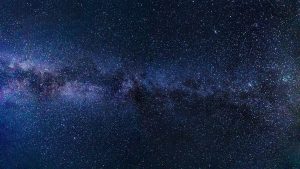
There at least two-hundred and fifty billion stars in the Milky Way. The Milky Way is just one galaxy in around a hundred billion known or visible galaxies across all of space. If we took this as the number of stars in space and converted it to seconds in time, then this number of stars would add up to nearly eight-hundred thousand years.

In other words, if you counted these stars at a rate of one per second and never did anything else, it would still take you eight-hundred thousand years to count them. This about four times the length of time that humanity on planet Earth has been considered to be “civilized”.

We are small and insignificant in the face of this cosmic scale.

Ignoring the possibility of non-carbon-based life, carbon-based life needs to live within the Goldilocks Zone of a universe. This means that life needs a planet of sufficient size and with water and oxygen that has a stable rotation neither too far nor too close to a star. This makes it plentiful in the building blocks of life and neither too hot nor too cold for life to form.

If space has a hundred-billion multiplied by two-hundred-and-fifty-billion stars out there, then statistically some of these will have planets orbiting them within this Goldilocks Zone. Even if one in a billion of these stars has such a planet–this is 0.0000001% of these stars–then there would be literally billions of them out there.

Let us assume, once again, that only one in a billion–once again, 0.0000001%–of these planets in these infinitesimal rare Goldilocks Zones has actually evolved complex life. That would mean that there are over twenty-five thousand possible planets where complex life has actually evolved.

The Milky Way in which we reside is one of the older galaxies–but far from the oldest–so let’s assume that three-quarters of these planets that host life are younger than us. Thus, their lifeforms would probably be less evolved than us (or, potentially, still building up to creating life sometime in the future). Hence, we will ignore them as sentient, conscious beings for our purposes (though, they may well be so in the future). Hence, that would still leave over six thousand older planets that potentially hold life that is equally or more evolved than our life on Earth.

Do not forget that over long periods of time, the risks of extinction rise. It may be self-inflicted from weapons or wars, naturally driven by viruses, seismic events or weather patterns, or cosmically created by asteroids or other things hitting the planet before life has evolved technology to survive the said disaster. The point is, a large number of these older, life-holding planets would have seen extinctions that either would have reset their evolutionary clocks behind ours or completely wiped life out on these planets.

Let us assume that 99% of these older planets have had some such event–and that their life could not save itself from said mass extinction. Thus, these planets no longer factor into our calculation as these planets are now barren rocks floating out in space.

That still leaves just shy of a hundred planets were life has not just survived, but thrived. And, in so doing, is probably thousands to billions of years more evolved than we are on planet Earth floating our the Sun in the Milky Way. If you consider that planet Earth hosts a couple million life forms–almost nine million, per our last estimate–how many life forms would these rare, surviving and succeeding parent-planets hold? Perhaps approaching a billion collective types, shapes and forms of life with, at least one per planet, being more evolved and technologically advanced than we currently are.

Hence, cosmic maths dictates that it is not if alien life exists. With near certainty (per our maths above, we have given it less than one percent of a quarter chance in a billion-billionth of a percent, yet even that gives us plenty of alien life!), alien life does exist. The only variable is how much alien life exists. And, there is probably quite a lot of it too.

We are small and insignificant in the face of this cosmic scale. We are not unique in being life–or alive–and we are not unique in being conscious and having a degree of power over our destinies. We are also not unique in constantly being at threat of extinction and, statistically, we are unlikely to survive.

But why would all this life exist? Why would it matter?

Perhaps the answer–once you strip out our typically human-centric view of things–is one of statistical odds.

If “God” exists, he would not be fighting some arch-enemy that is the root of evil. Evil is a human and moral invention. Cosmically, the two differentiating things that do exist is organic matter–life!–and inorganic matter, or everything else. Rather, this God would be fighting on the side of life against its very extinction in a harsh and hostile space where life–however rare–is also fragile and statistically doomed.

If this God was making a divine gamble that life–in whatever shape or form–would survive, the best way to do this would be to diversify its shape, form, placings and sensitivities. In other words, this God would cast the dice against the inhuman, inorganic universe with only two variables in his favour: diversification and adaption.

Make lots of life. Make life of all different types. And make life spread out all over the place. This increases the odds that at least some life survives.

In other words, humans would be little more than a venture capital investment on God’s portfolio of life as he tried to protect against complete bankruptcy in the harsh, risky space and time of reality.

From thermo-nuclear super novas wiping galaxies or black holes sucking everything in, from radiation or vacuums, from viruses to changing weather patterns, from the randomness of mating and DNA to the precision of evolution over long periods of time… We are minute data points in the most incredible series of numbers amidst the most magical of experiments in the largest of all portfolios that reach scales and quantum that our mortal minds cannot fathom.

And yet we worry about what clothing we should wear? We worry if people like us or if we are getting older? We are concerned about how many likes we get on Facebook or what our neighbours are doing? We spend time wondering what to eat, to watch on TV and to say to fill the silence, but we never look or around at the cosmos or space and time. We count our bank balances and Uber rides, not the stars in the sky nor the galaxies that hold them. We judge when mere minutes go by in a queue but we barely glance at the math of space and time, nor where or how we have arrived at where we have arrived, nor even where we are going.

We are small and insignificant in the face of this cosmic scale. We are not unique in being alive and we are not unique in being conscious and having a degree of power over our destinies. We are also not unique in constantly being at threat of extinction, but we are petty in our immediate wants, desires, thoughts and actions. Our myopic consciousnesses fold in on themselves, hiding this maths from us either out of selfishness or to protect our fragile egos from its comprehension.

But is such a comprehension of this scale so terrifying? Is it so terrible that we are small data points in a grandest of statistics? Or, could this comprehension not be liberating?

We are small and insignificant, but therein lies our beauty. We can each follow our hearts and our dreams with little cosmic consequence. We need not worry about mundane things, as they really do not matter. We can carve our own meanings in this cosmic maths and find our own ways to weigh this grand scale across our lives. We need not feel guilty for going in any direction for life is both so plentiful and so scarce that we are both insignificant and a miracle. All at once.

Is it not liberating to comprehend this?

I do not expect you to understand this. I do not expect you to condone or agree with it. I only expect you to do the maths and realize the same thing I have realized: against all odds, I am alive and, against all cosmic scale, I still matter to myself. Beyond that, you are free. This appreciation is the suicide of our myopic human-centric consciousness and the birth of a beautiful, cosmically-scaled mind.

And, so, in the spirit of this planet-locked suicide, I invite you upon one of our colony starships. Earth is a few short generations from dying as is most of our solar system. Leaving our planet may be risky, but staying is riskier. Colonizing space may be risky, but not trying is riskier. Humans will likely be extinct soon, but life is plentiful out there. It will take thousands of years for us to reach the nearest galaxies, but our colony starships are self-sustaining and cryogenic stasis is now a reality. We can reach the furthest flung parts of deep space, eventually, and all the wonders that it brings with it.

All you have to do is buy a ticket. Buy a chance. Against all odds, you are alive and you still matter to us. So, do the math, and buy a ticket.

Kind regards,

Colony Recruitment Agency

2146 AD